
Explore five historic Loire Valley châteaux where royal history meets winemaking. Discover castle tours, wine tastings, and where to stay in France.
Wine and royalty have long been a natural pairing. So it’s no surprise that in France’s Loire Valley, known as the Valley of Kings, former royal residences also serve as working wineries.
In the 15th and 16th centuries, the Loire was to Paris what the Hamptons are to New York today: an escape for monarchs like Charles VII, Louis XI, and Francis I. These kings built lavish châteaux along the Loire River as retreats. As the court settled in, local wines, including sancerre and vouvray, became fixtures at royal tables. Francis I was such an oenophile that he imported 80,000 vines from Burgundy to plant around Château Chambord, giving rise to the romorantin grape, which is still grown there today.
Today, more than three million travelers visit the Loire’s famous châteaux, but most don’t realize that some of the most popular and grand properties are also wineries. From centuries-old wine cellars to vineyards revived on royal estates, these five Loire Valley châteaux let visitors explore French history through its wines. Each property combines a distinctive architectural legacy with an equally compelling winemaking story.
Château de Brissac: Wine Tasting in France’s Tallest Castle
Located in the western Loire’s Anjou region, Château de Brissac is known as the Giant of the Loire because it’s the tallest castle in France, with 204 rooms.
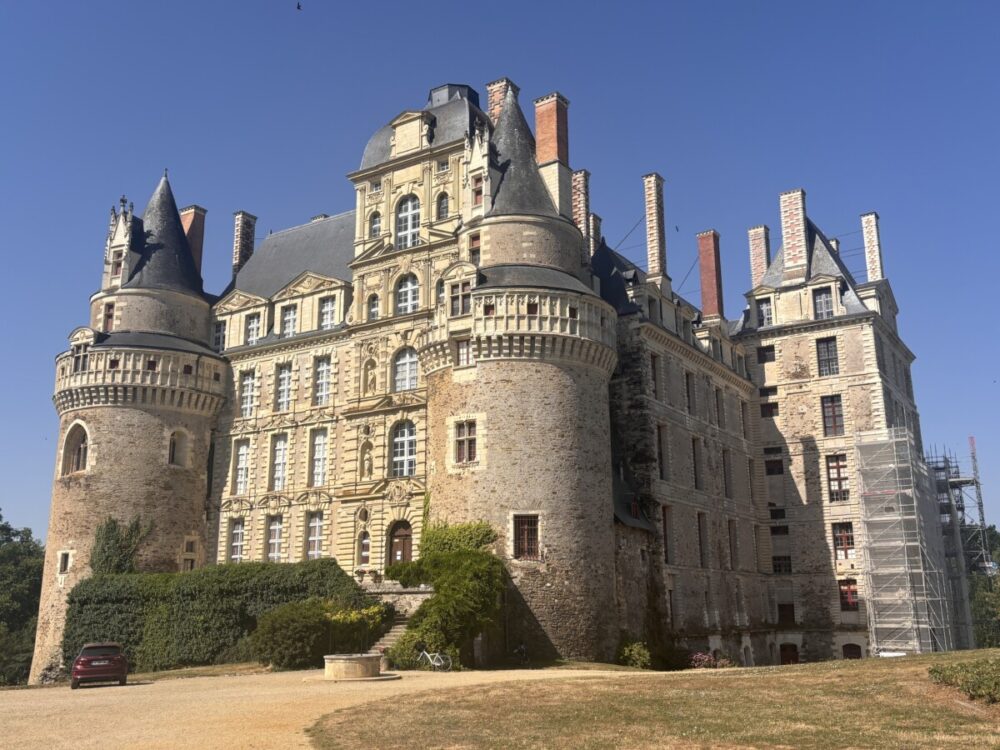
The tallest castle in France soars high in the Loire. Photo by Dena Roché
Originally built as a fortress in the 11th century and rebuilt in the 15th century, Château de Brissac has been the home of the Dukes of Brissac since the 1600s. Today, the 14th Duke of Brissac still calls it home.
The château was closed the day I was supposed to visit, but the duke himself met my husband and me at the front door and ushered us inside. We were given free rein to wander the castle to explore an impressive collection of tapestries, paintings, and furniture spanning the 15th to 18th centuries. But for me, the snapshots of the duke and his family stood out most. A vivid reminder that this is a historic castle, but it’s also someone’s home.

The Duke of Brissac and his family. Photo courtesy of Château de Brissac
The château has made wine since the 16th century. Today it has about 70 acres of vines and produces Anjou Brissac AOC, a red blend of cabernet sauvignon and cabernet franc, and a Rosé d’Anjou from cabernet franc, which it is best known for. Public tours of the castle end in the cellar with a wine tasting.
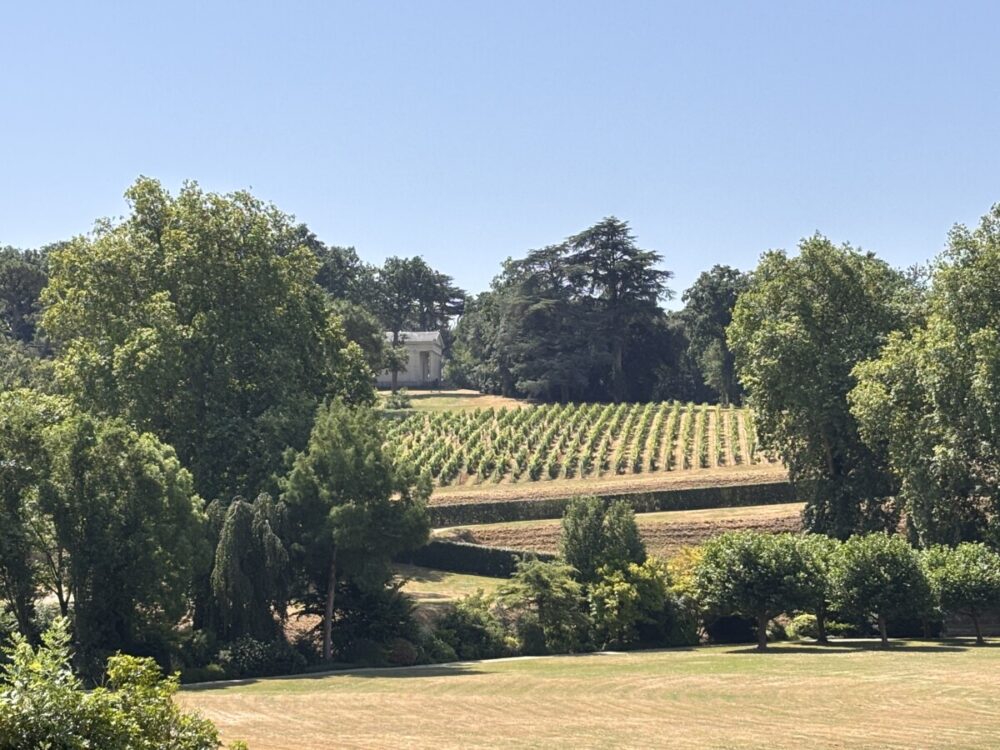
The vineyards at Château de Brissac. Photo by Dena Roché
Château de Brézé: Underground Wine Cellars and Cabernet Franc
Built in the Middle Ages, Château de Brézé still has an underground fortress of tunnels and firing posts, though the castle itself was transformed in the 16th century in the Renaissance style.

Château de Brézé. Photo by Jack Del Soldato
The castle has always been privately owned and is now home to Count and Countess Jean de Colbert and their daughters.
Touring the castle is a walk through history, covering half a mile of underground tunnels leading to former stables and a barrel room that was one of the largest wine-pressing rooms in France. The castle’s dry moats are some of the deepest in Europe.
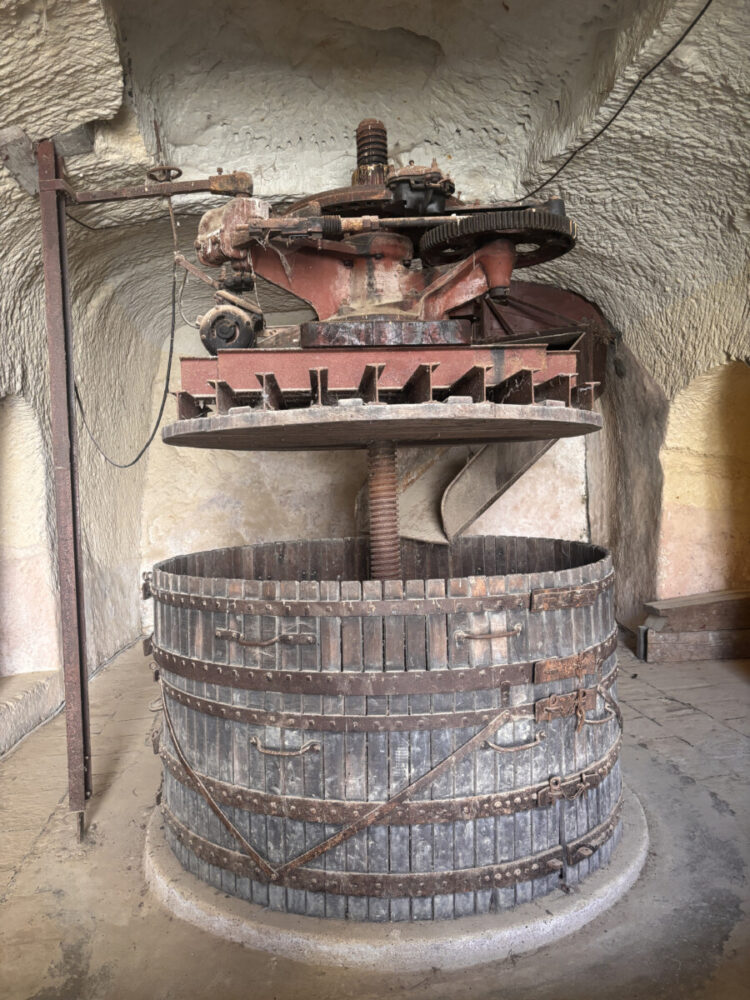
A medieval wine press at Château de Breze. Photo by Dena Roché
The château has produced wine since Medieval times. Today, the estate has 25 acres of vines and produces 14 different wines, including the world-class Saumur-Champigny Cabernet Franc. Don’t miss sampling the Cuvée La Girardrie expression during a tasting after your tour. I visited the Château during a sizzling summer day, so despite the fact that I was in cabernet franc land, I really enjoyed trying the Château’s Saumur Blanc, a 100 percent chenin that refreshed with crisp acidity and minerality, and a Saumur Blanc Brut made in Méthode Traditionnelle and Crémant de Loire Rosé.
Château de Chenonceau: Wine Tasting at the Ladies’ Château
Known as the women’s castle because of its history of strong female owners, Château Chenonceau is the most popular private castle in the Loire Valley. I can attest to how crowded it was the day I toured it. I’d highly recommend booking one of the private nighttime experiences to have more breathing room to enjoy this spectacular property.
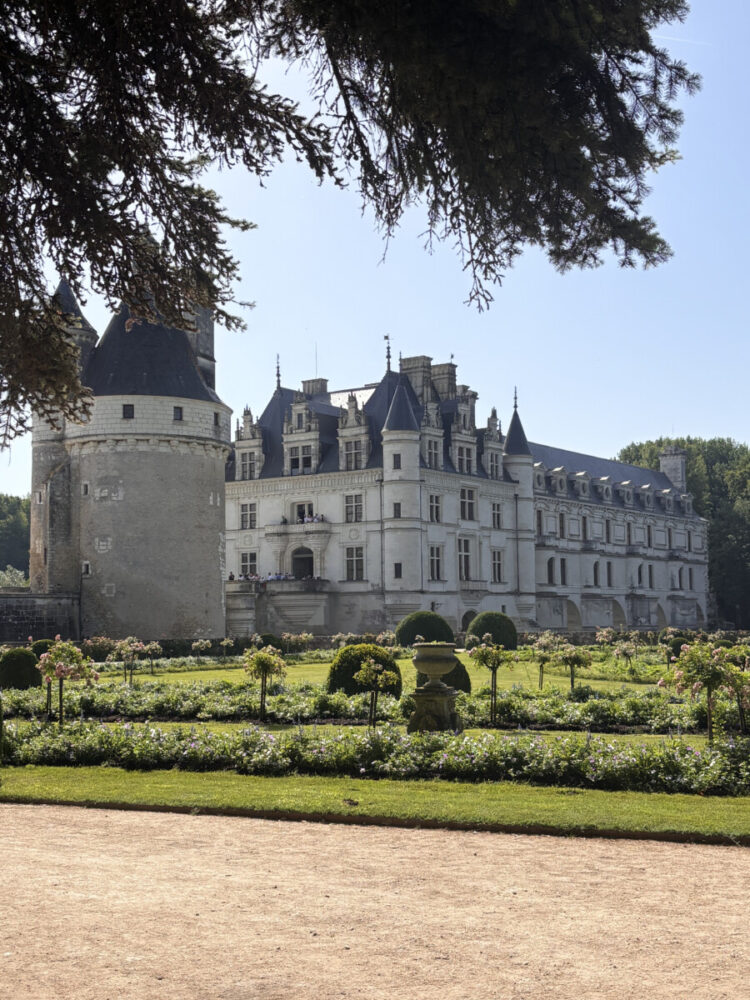
The woman’s castle: Château Chenonceau. Photo by Dena Roché
The backstory of Château Chenonceau is juicy! King Henri II was married to the formidable Catherine de’ Medici. She truly loved him, but he loved Diane de Poitiers, his former governess, who was two decades older. He gave her the crown jewels and Château Chenonceau. Diane improved the estate, including adding her famous garden. When Henri died, Catherine forced Diane to return the jewels and the castle, and she built her own garden directly across from Diane’s garden. A truly beautiful final jab.
The chateau has made wine since the 16th century, and you can book a wine tasting in the original vaulted cellar. With the temperature over 100 degrees outside, my wine tasting in the blissfully cool wine cave was the highlight of the day. We sampled the estate’s six wines, including the flagship and my favorite—the Touraine-Chenonceaux 100% sauvignon blanc.
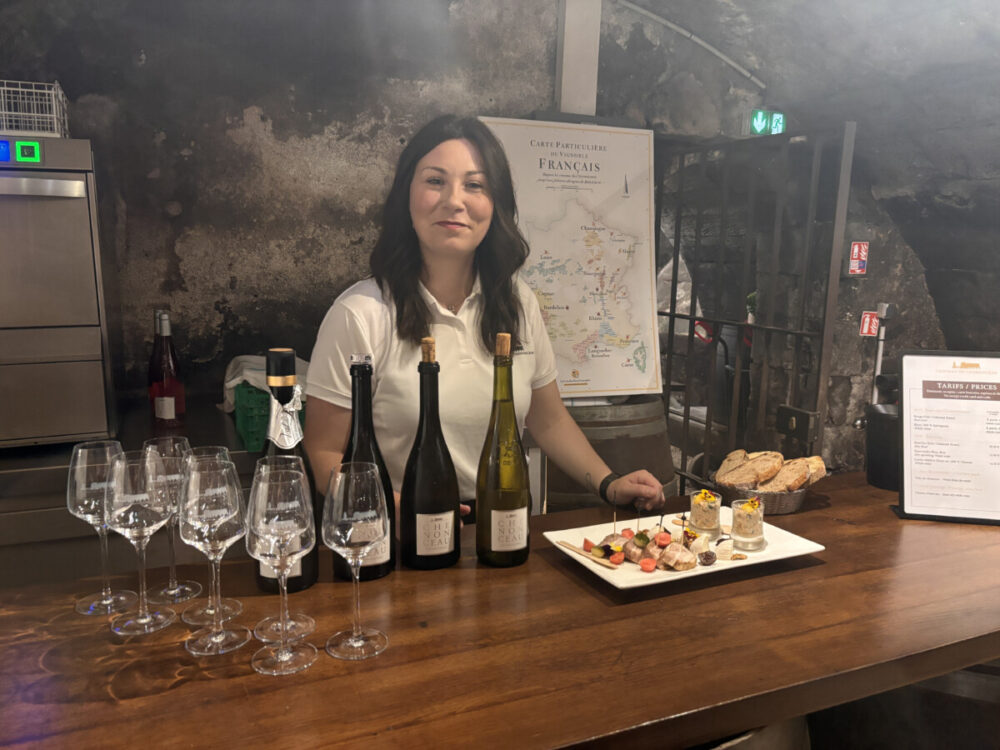
Wine tasting in the 16th-century cellar. Photo by Dena Roché
In addition to the cellar wine tasting, visitors can book a degustation with food, tastings in the castle or gardens, or an evening wine tasting tour.
Château de Chambord: Reviving a Royal Winemaking Legacy
Château de Chambord, the largest and most visited castle in the Loire, was named a UNESCO World Heritage Site in the early 1980s, but surprisingly, it was never a permanent residence.
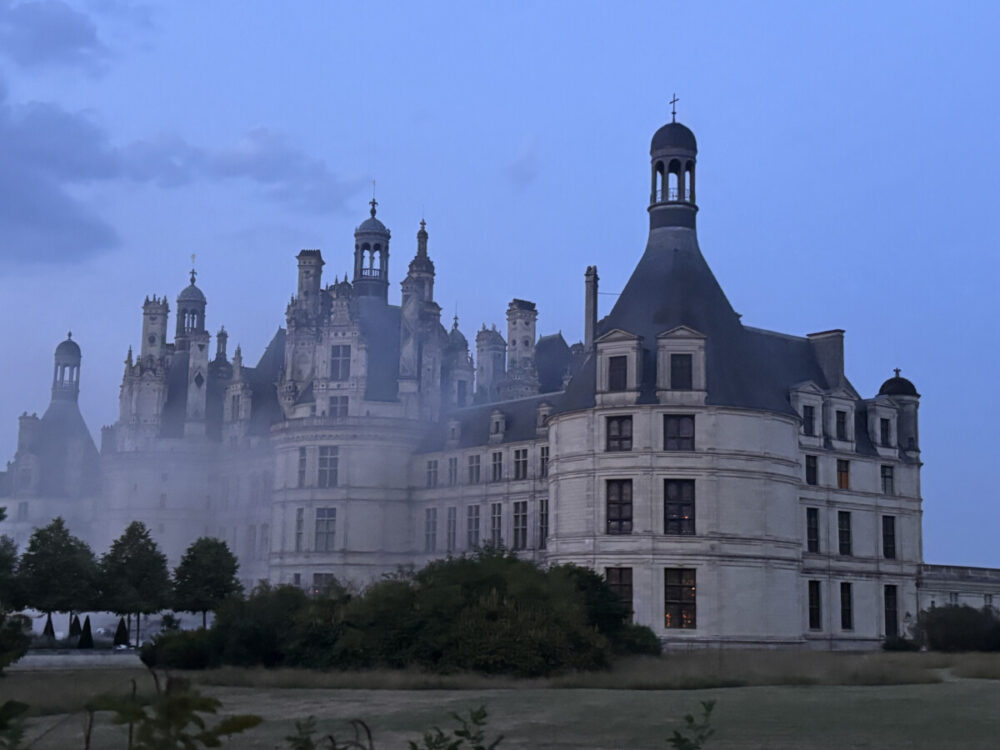
Château de Chambord at night. Photo by Dena Roché
Built by Francois I, starting in 1519 and using half the state’s construction budget, the King used the castle for only 72 days. While other monarchs, including Louis XIV, the Sun King, frequented Chambord, it was often vacant. Consequently, the grand chateau has few furnishings. The piece de resistance is the famous double helix staircase, likely designed by Leonardo da Vinci.
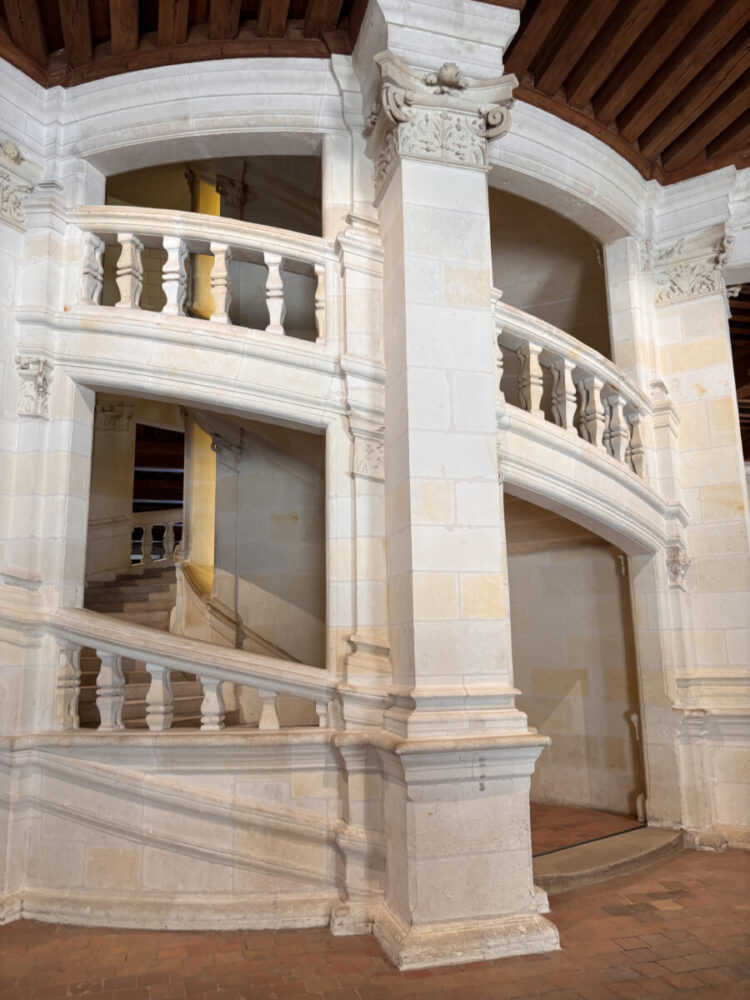
The famous Leonardo da Vinci double helix staircase. Photo by Dena Roché
Chambord’s wine history dates to the Burgundy vines Francois I planted in 1519. The castle made wine until the French Revolution and phylloxera wiped out the vineyards. The vineyards were replanted in 2015.
While the chateau doesn’t offer wine tastings in the castle, I enjoyed the domain’s Cheverny Blanc at Le Grand Saint-Michel restaurant in our hotel, Relais de Chambord, just steps from the castle.
Visitors can purchase Chambord’s mineral-driven romorantin, pinot noir-focused Cheverny Rouge, or blanc de blanc blend of romorantin and orbois in the castle’s gift shop.
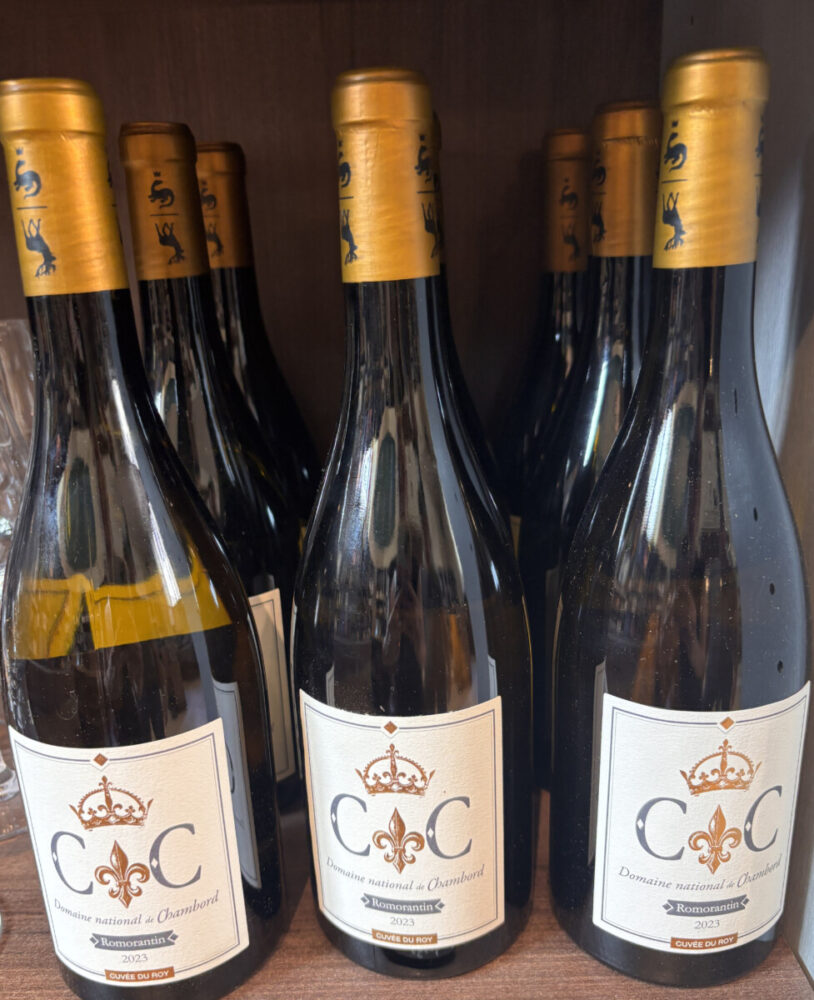
Bottles of Château de Chambord wine. Photo by Dena Roché
Château de Sancerre: Discovering Sauvignon Blanc and Terroir
Sancerre makes a special expression of sauvignon blanc that is my favorite in the world, so the opportunity to visit the town where it comes from was exciting.

The vineyards of Sancerre. Photo by Jack Del Soldato
Winemaking in Sancerre dates to Roman times, but Château de Sancerre is a relatively young estate, built in 1919 by Louis Alexandre Marnier-Lapostolle, the man who invented Grand Marnier.
Château de Sancerre has 136 acres of vineyard encompassing all of Sancerre’s soil types-flint, clay, chalk, and sand. All of its wines are vinified, aged, and bottled on-site. Their flagship wine is the Château de Sancerre Blanc, which is crisp and structured with some flinty notes. I preferred the Chene Marchand, made from grapes from one of Sancerre’s most prestigious plots, and the Les Roties, a cuvee with a mix of floral and toasted notes. Visitors can book the Au couer des terroirs tour and tasting, available daily except on Mondays.
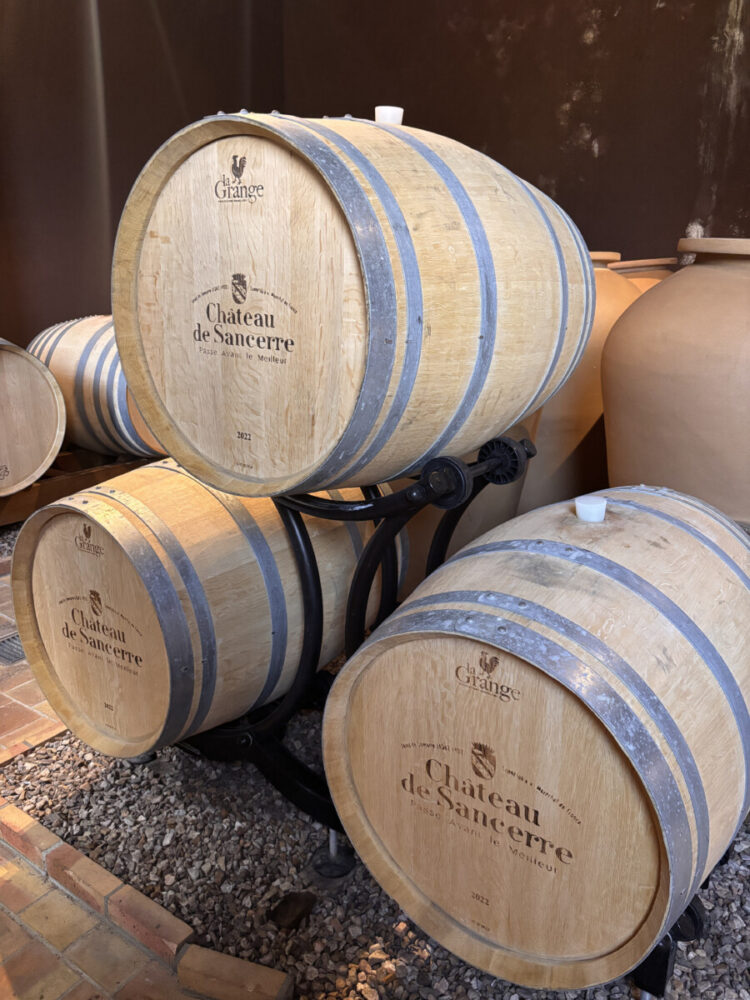
Touring the Château de Sancerre winery. Photo by Dena Roché
In wine, you often hear that terroir drives taste, and Sancerre puts that principle on display. Visit the Maison des Sancerre museum to learn how the region’s four soil types and microclimate influence the wines. Do an on-site tasting to experience how Sancerre from Terre Blanche is very different than Sancerre grown in Silex, or let the sommeliers at the nearby La Banque wine bar guide you on a leisurely discovery of Sancerre’s wines. To see the difference in the vineyard, book a wine safari with Domaine Vincent Grall.
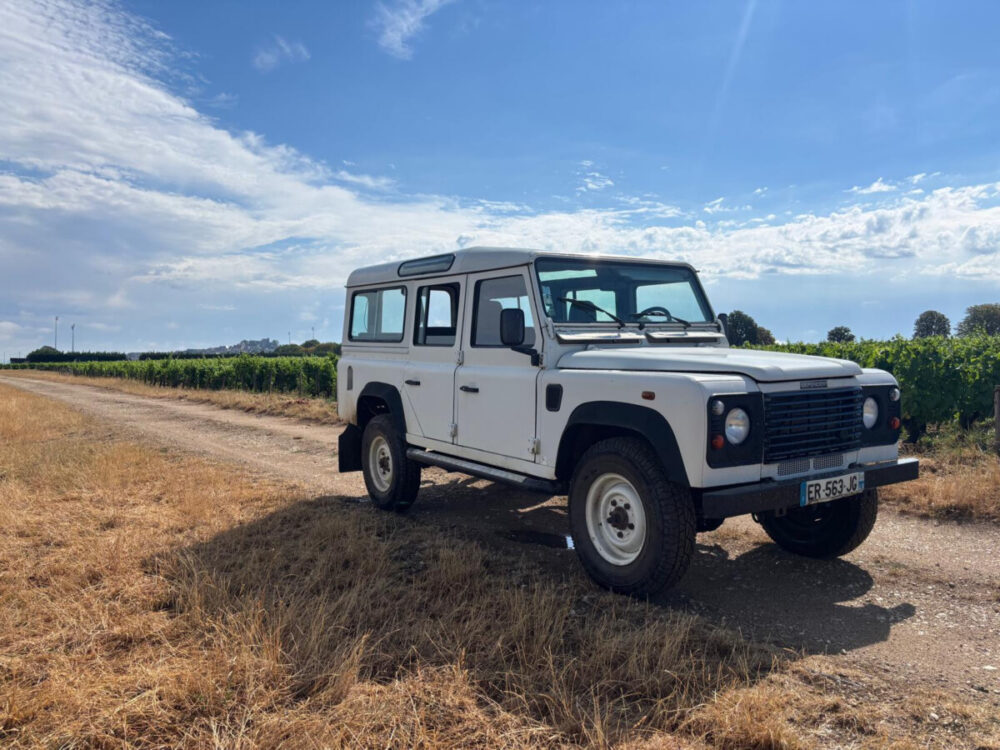
Take a wine safari through Sancerre’s vineyards. Photo by Jack Del Soldato
More Loire Valley Châteaux Worth Visiting
As you raise glass after glass at winery châteaux, you can weave several other standout castles into your itinerary.
Château du Clos Lucé
Château du Clos Lucé was Leonardo da Vinci’s final home. It’s humbling to walk the halls in the footsteps of his genius. With models of his inventions and art exhibits, it was one of my favorite castles, even minus the wine!
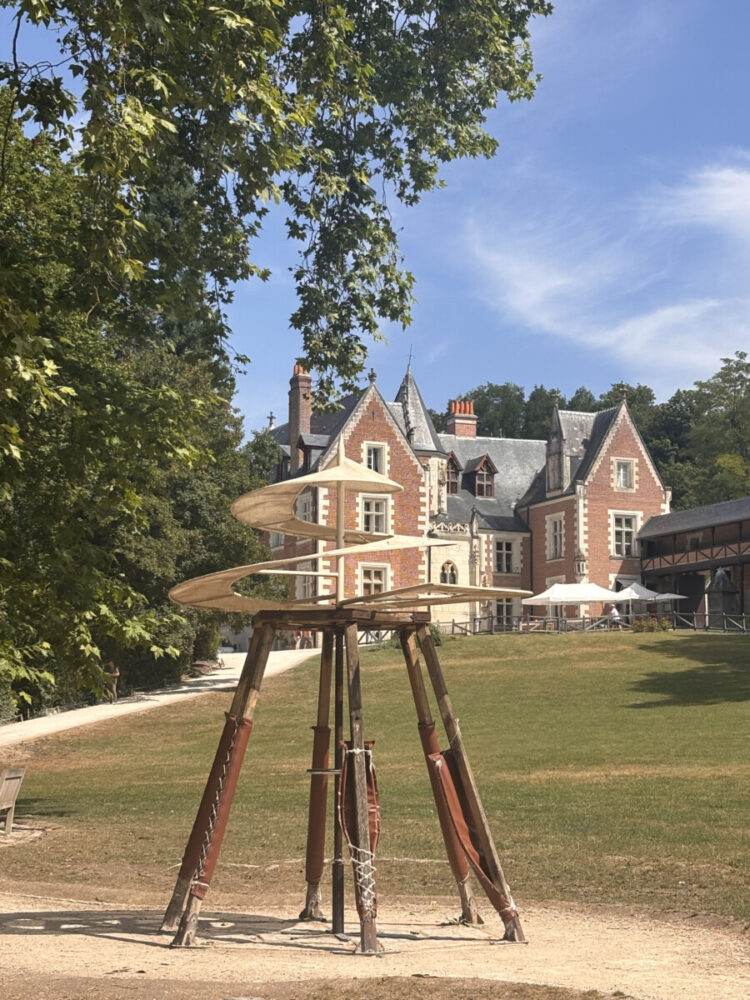
In the footsteps of greatness at Clos de Luce. Photo by Dena Roché
Château Royal d’Amboise
Known for its beautiful view of the Loire Valley, Amboise was a favorite of the Kings of France. Leonardo da Vinci is buried in its chapel.

The writer exploring Amboise Castle. Photo by Jack Del Soldato
Domaine de Chaumont-Sur-Loire
Chaumont-Sur-Loire, with its turrets and moat, screams castle. Today, its International Garden Festival and art installation make it a must-visit for creatives.
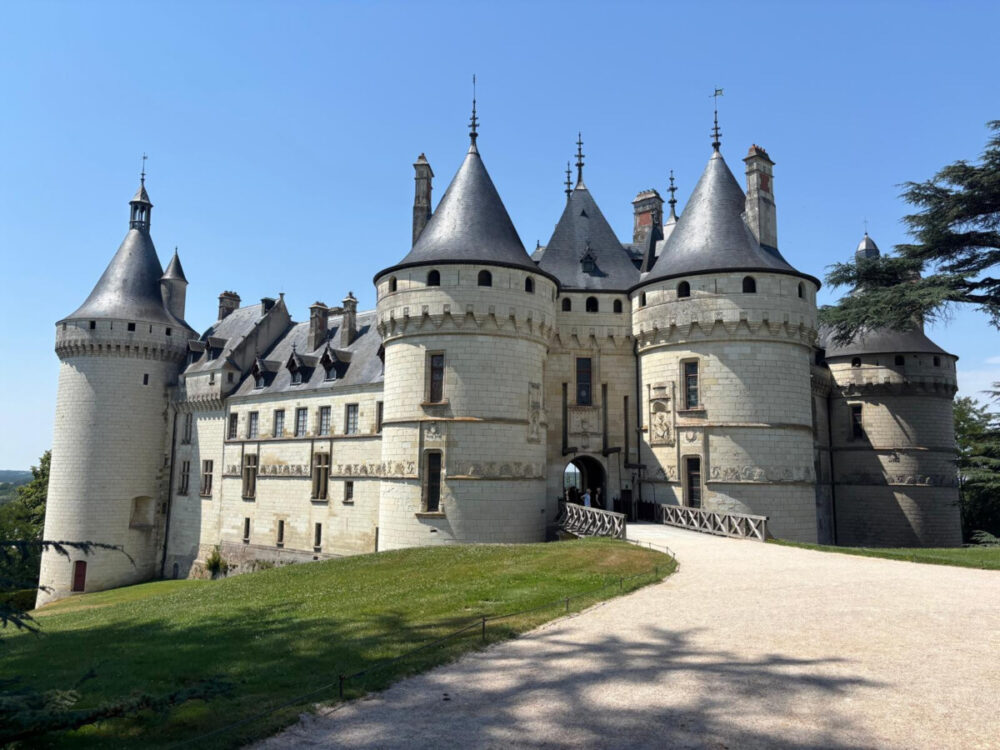
Fairy Tale Chaumont-Sur-Loire. Photo by Jack Del Soldato
Royal Château of Blois
Four architectural styles make up the unique Royal Château of Blois. In summer, its late-night light show shouldn’t be missed.
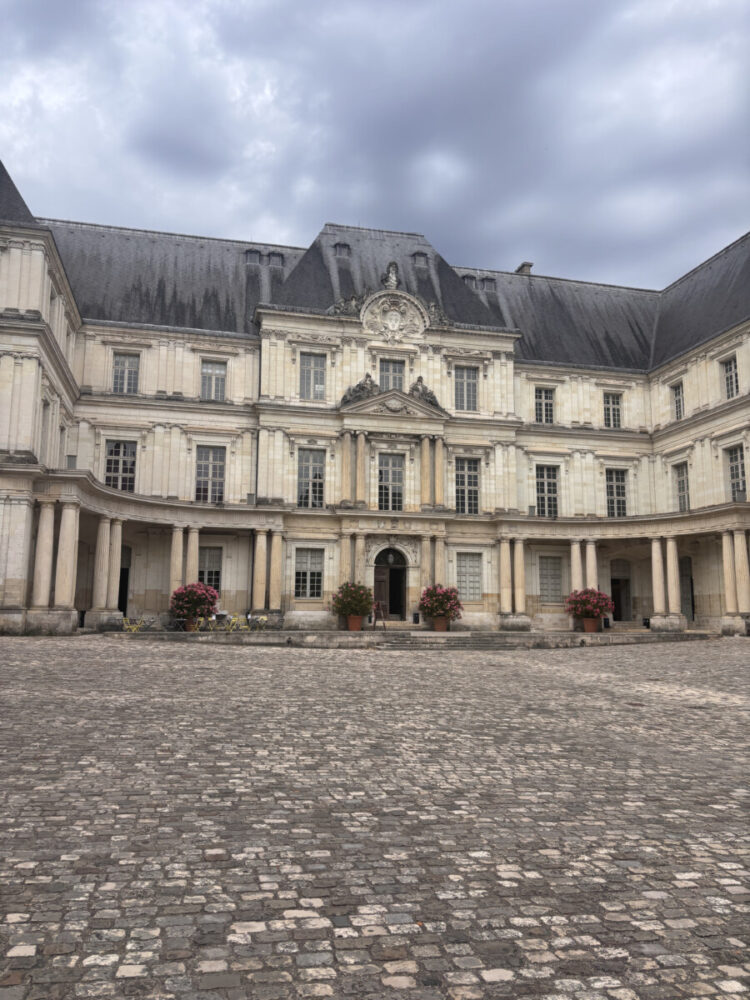
Blois Castle. Photo by Dena Roché
Château de Cheverny
My European husband grew up reading the Tintin comic book series, and when he learned that Château de Cheverny was the real-life setting of a castle from the series and that the château had a Tintin museum on-site, we had to visit.
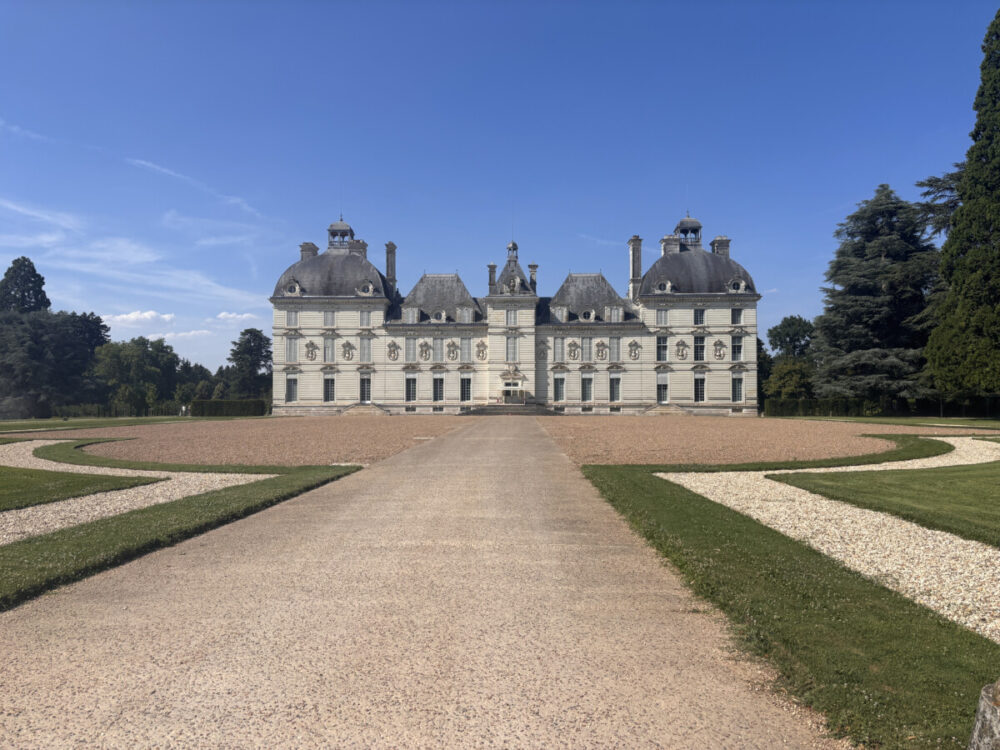
Château de Cheverny. Photo by Jack Del Soldato
Where to Stay in the Loire Valley Wine Region
At nearly 500 miles, the Loire is France’s largest wine route. Basing yourself in several regions will make visiting the region’s winemaking châteaux easier.
Château de Brissac
Live like a king staying in the Duke of Brissac’s castle in the heart of the Anjou region.
Le Clos d’Amboise
This converted 17th-century manor’s 20 rooms will make you feel like royalty. Breakfast in the garden is a treat.
Relais de Chambord
Stay at the only hotel within the Chambord domain, and enjoy castle views all to yourself when the tourists leave for the day.
Le Panoramic Hotel
Sweeping views of Sancerre vineyards make this modern hotel an ideal base in the city. Arrive early for breakfast to enjoy one of the few balcony tables.
More Articles About Exploring France
- Savoring Normandy: A Food and Drink Guide to Northern France
- Bordeaux Wine Tours: Where the City Meets the Vineyards
- Ultimate Guide: 2 Days in Paris for First-Time Visitors
- 10 Best Museums of Paris
- Dreaming of Spring in Provence
The Loire Valley: Where Wine and Royal History Meet
From the medieval wine cellars of Brissac to the original Burgundian vines planted at Chambord, the Loire Valley’s châteaux have been making wine since kings actually walked their halls. Now, centuries later, they still use the same vines, the same cellars, and the same commitment to the craft. The Loire’s grand châteaux aren’t just historic backdrops for a tasting; they’re working wineries where you can sip the same cabernet franc or sauvignon blanc that once graced royal tables. In the Valley of Kings, the crowns may be gone, but the winemaking never stopped.
Ready to explore the wine of kings for yourself? Start planning your French wine country getaway, and discover more inspiring wineries, culinary experiences, and European travel ideas on Wander With Wonder.

.

I love this article, especially the history, description of the wines, and its practical advice.