
Choosing the right Chicago architecture tour depends on more than price. Compare routes, guides, boats, timing, and amenities before booking your river cruise.
Fourteen boats can sit on the same stretch of river on a Saturday afternoon, and the people on board have wildly different experiences. Some are squinting at a docent’s laminated photos while a diesel engine drowns her out. Others are sipping a drink on an open-top deck with a clear view of the Wrigley Building’s clock tower. Same river. Same skyline. Very different experiences.
If you are building a Chicago itinerary, the river is not optional. Architecture is why the city looks the way it does, and seeing it from the water is the fastest way to understand why. The problem is that “architecture cruise” has become a catch-all label, and booking the wrong one is an easy way to burn an afternoon you could have spent at the Art Institute. So here is the honest version: how to tell the boats apart before you hand over your card, and where a Chicago architecture tour fits into a trip that also includes deep dish, the lakefront, and at least one museum.

Photo by Susan Lanier-Graham
What Separates a Great Chicago Architecture Tour
Guide quality beats boat quality. Every time. I would rather sit on a plain pontoon with an entertaining guide than on a polished vessel with a recorded narration loop. Ask before you book. Live narration, or audio recording? Do the guides have a background in design or history? A good guide will point at a facade and tell you what the ornament means, who paid for it, and what the building replaced. A mediocre one reads dates off a card.
Route matters more than duration. The Chicago River splits into three branches, and what you see depends entirely on which ones your boat covers. The Main Branch gives you the icons: the Merchandise Mart, Marina City’s corncob towers, the bridges stacked one behind the other. The North Branch heads toward the old industrial corridor. The South Branch runs past the newer towers and the riverwalk expansion. A 90-minute tour that covers all three shows you a different city than a 45-minute loop of the Main Branch.
Open deck or glassed in? This one depends on your travel month and your tolerance for wind. An open top deck on a Summer evening is one of the best seats in Chicago. That same deck in late October, with a 25 mph gust coming off the lake, sends most people downstairs by the second bridge. In spring and fall, a climate-controlled cabin with big windows is the smarter call, provided the windows actually open.
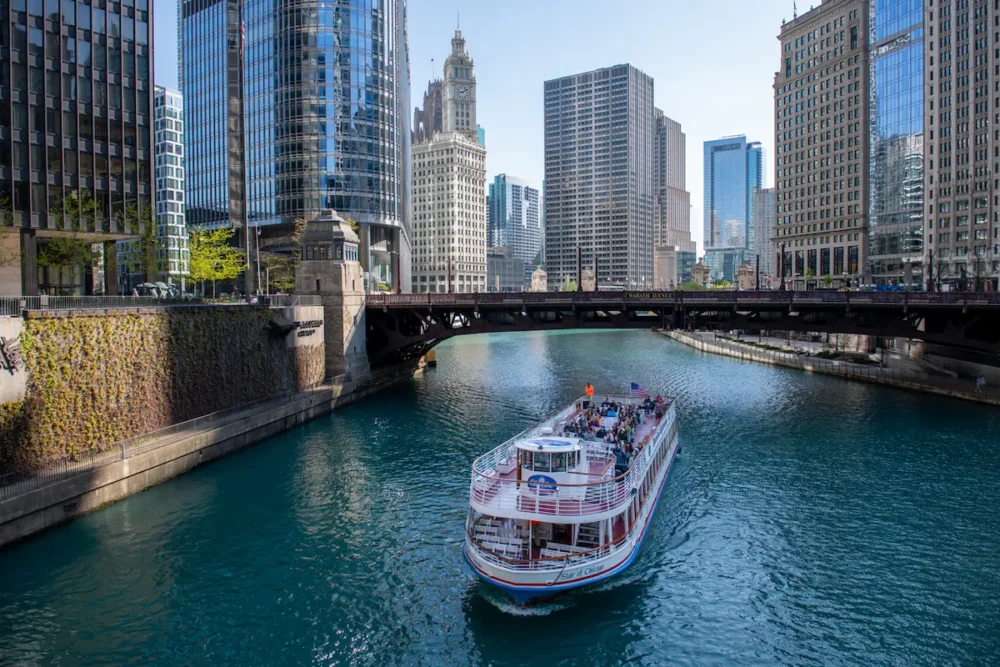
Photo by Oliver Peric courtesy of iStock via Getty Images
Match the Boat to Your Travel Group
The booking that works for a solo traveler rarely works for a family of six, and neither works for a corporate group. Run your group through these questions before you compare prices.
- Who is in your party? Seniors and anyone with mobility limits do better on boats with seating throughout and short ramps. Toddlers do better on shorter trips, period.
- Do you want a bar or a lecture? Some cruises lean hard into cocktails and music. Others feel more like a moving classroom. Both are legitimate. Pick the one that matches your mood that day, not the one your friend recommended three years ago.
- What is your time window? A 90-minute tour, plus boarding, plus walking to the dock, is realistically two and a half hours of your day. Plan for that, not for the listed duration.
- Is your group large? Groups of six or more adults, student groups, and school trips usually qualify for discounted rates, and kid pricing often drops to free for the youngest travelers.
- What time of day is it? Midday light is flat, but the crowds at the dock are smaller. Sunset is spectacular and sells out first.
Why See Chicago Architecture From the River
You can walk the Chicago Riverwalk for free and see a lot of the same buildings. I still send first-time visitors out on the water first. From the river, you get the full height of each tower in a single glance; the relationship between buildings reads clearly, and you cover in an hour and a half what would take a full day of walking. The city’s skyline is also legally protected in ways you will not notice from street level, a fact worth knowing before you judge a building’s height on your own.
The Chicago River itself is infrastructure with a strange history. Engineers reversed its flow more than a century ago to protect the lake’s water supply, an achievement the National Park Service covers in its materials on the river and the city’s development. Hearing that story while drifting past the spot where it happened lands differently than reading it in a guidebook on your couch.

How to Plan Your Day Around the Cruise
- Most docks sit in the Loop near the south end of Michigan Avenue, which makes it easy to build a full day around them. Downtown Chicago tourism draws tens of millions of visitors a year according to Choose Chicago, so the smartest move is to book an early slot and build the rest of the day around it rather than the other way around. Here is the order I would use for a first-time trip:
- Book the architecture cruise for mid-morning, when the water is calm, and the light on the
facades is even. - Walk the Riverwalk afterward, heading east toward the lake.
- Grab lunch nearby, then spend the afternoon in a museum or on Michigan Avenue.
- Save the lakefront and Millennium Park for golden hour.
Getting there without a car is simple. Most downtown docks are a short walk from multiple L stations, and the regional rail system is built around the Loop, which the Chicago Transit Authority and its partner agencies describe in their rider information. If you are driving in from the suburbs, parking near the river costs real money, so budget for it or take the train.

Chicago has a lot to offer. Photo by David Mark via Pixabay
What to Know Before Booking a Chicago Architecture Tour
Book direct when you can. Third-party resale sites add fees and sometimes bury the departure point, which is the one detail you cannot get wrong. The dock location is the single most important line on your confirmation.
Arrive early, not on time. Boarding usually starts well before departure, and boats leave on schedule whether you’re on the pier or not. Thirty minutes early is comfortable. Ten minutes early is cutting it close on a holiday weekend.
Ask about private options if you have a group. For bachelorette parties, family reunions, or client events, a private charter on the river and out onto Lake Michigan changes the whole experience. You set the pace, you pick the music, and nobody has to fight for a spot at the rail.
Check the cancellation policy. River tours run in light rain. They do not run in lightning or high wind. Knowing the refund and reschedule rules ahead of time saves a stressful phone call on vacation.
One last thing. Skip the urge to photograph every single building. Pick three you love, get those shots, and spend the rest of the trip actually looking. The skyline is not going anywhere, but your attention is a finite resource, and the best tour memories tend to be the buildings you remember by name afterward, not the ones sitting in your camera roll unlabeled.
A Chicago architecture tour can do more than fill a few hours—it can give you a new perspective on the city’s history, skyline, and neighborhoods. Choose a cruise that fits your group, schedule, and travel style, then use what you discover on the river to shape the rest of your visit. Explore more Wander With Wonder articles for Chicago inspiration, destination ideas, and practical travel tips.
.

0 Comments