
Discover the magic of Amsterdam through its canals, world-class museums, vibrant cafés, historic neighborhoods, and unforgettable Dutch culture.
Amsterdam is one of Europe’s most unique cities, known for its intricate network of canals. The canals form a crescent surrounding the city’s center, and within that network, 17th-century engineers built 90 islands and hundreds of bridges. Along those canals, the wealthy merchants of Holland’s Golden Age built fine shops and homes that still define the city’s architecture and style.
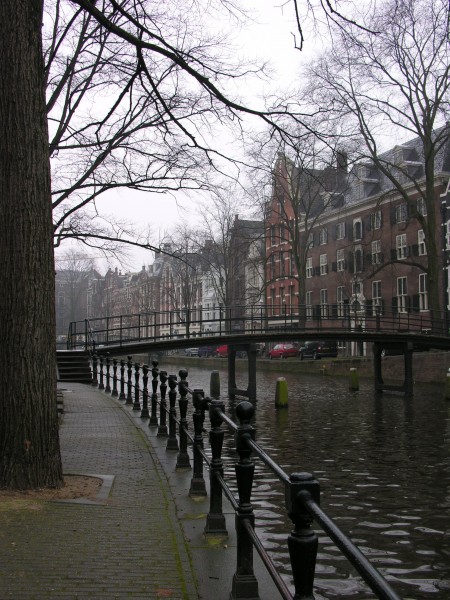
Canals in Amsterdam. Photo by Susan Lanier-Graham
Today, Amsterdam—with more canals than Venice and more bridges than Paris—is one of the most popular European tourist destinations, with nearly 9.5 million visitors in 2024. It’s time to explore the magic of this modern metropolis, often called the Venice of the North, still alive with Old World Charm.
Amsterdam’s Culture
The city center is so compact that you can walk almost anywhere. And that’s the best way to explore the art culture that has made Amsterdam what it is today. As you stroll along the streets, you’ll quickly feel the magic of this Old World city. Street musicians will captivate you with their melodies. Sit in one of the sidewalk cafés and soak up the friendly banter of the locals. Stroll through one of the more than 40 museums. Enjoy exquisite examples of sculptures and statues by artisans of yesterday and today that line many of the streets.
Amsterdam was Rembrandt’s home and the unofficial headquarters for the Dutch Masters in the 17th century. One of the premier examples of Amsterdam’s art is The Rijksmuseum. To get the most out of your visit, booking Rijksmuseum tours in advance with a knowledgeable guide helps bring the Golden Age masterpieces to life in ways a self-guided visit simply can’t match.
You can experience the wealth of the Golden Age: beautiful doll houses, fine silverware, exquisite examples of Delftware, and famous paintings by Jan Steen, Frans Hals, Vermeer, and Rembrandt. The museum is open daily from 9 AM to 5 PM and is free to anyone 18 and under. Admission €25 for adults.
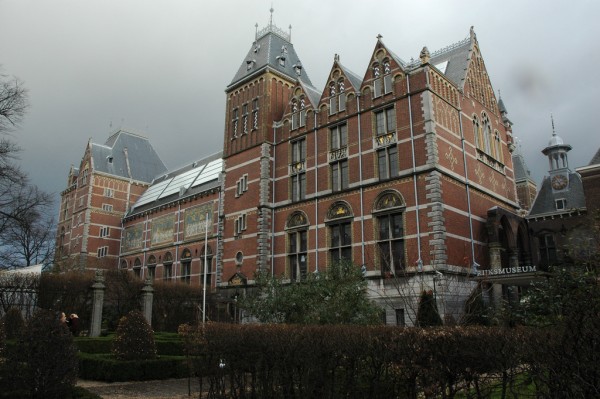
Amsterdam’s Rijksmuseum. Photo by Rob Lee via Creative Commons.
Another intriguing don’t-miss museum is Rembrandt House in the city center, just off Damstraat. Inside the home Rembrandt purchased in 1639, you’ll discover a little of the artist’s life. The house contains an almost complete collection of Rembrandt’s etchings. The house is open year-round from 10 AM except on Christmas Day. Admission is €23.50 for adults and €15 for youth up to 25. Children aged 6 to 17 are €8 with children under age 6 are free.
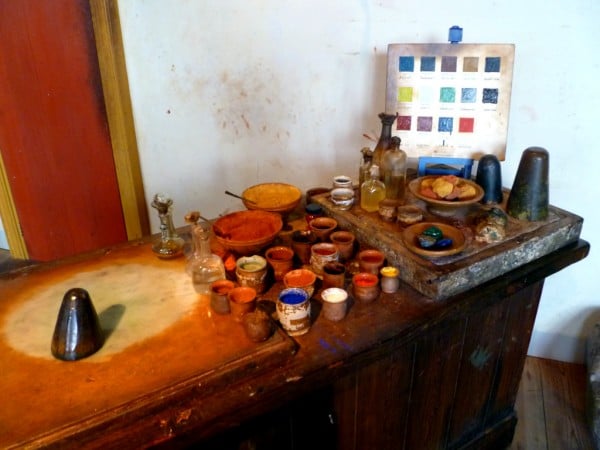
Rembrandt’s Materials at The Rembrandt House in Amsterdam. Photo by Casey and Sonja via Creative Commons
As you meander through town, you’ll not want to miss the Town Hall (Royal Palace) on the Dam. The original building burned in 1652. It was rebuilt on nearly 14,000 wooden poles buried over 30 feet down. The “new” building opened in 1655. Today, the Dutch Royal House officially entertains visiting dignitaries here. When not being used for official duties, guests are invited to visit the Royal Palace. It is open from 10 AM to 6 PM on designated days. Admission is €13.50 for adults and €9 for students. Admission is free for anyone 17 and under. Each tour includes a free mobile guide available in English, German, French, Italian, Spanish, Chinese, or Russian.
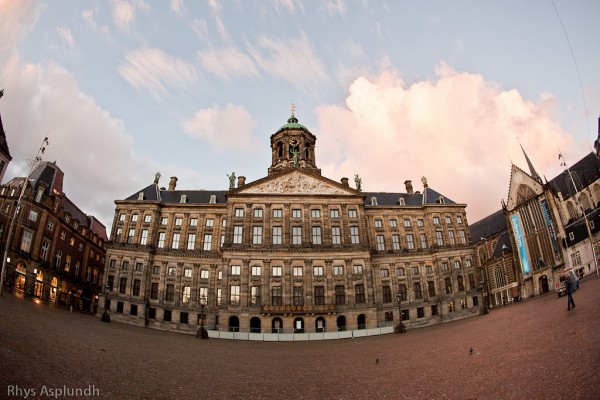
Amsterdam Royal Palace. Photo by Rhys Asplundh via Creative Commons
One unforgettable spot in Amsterdam is the Anne Frank House. It was here, in a small home not far from Dam Square, that the young Jewish girl lived and wrote her famous diaries during the Nazi occupation of Holland. The house is now a museum, open daily from 9 AM to 10 PM. Only those with tickets purchased online for a specific timeslot are allowed to visit the museum. Admission is €16.50 for adults, €7 for children aged 10 to 17, and €1 for those aged 9 and under, which includes a €1 booking fee. You must include everyone, even infants, in online booking. Please note that the Anne Frank House is closed on Yom Kippur and some other Jewish holidays. It also has shortened hours on some other days (including New Year’s Day), so check the website for exceptions to opening hours.
Two other world-renowned museums are the Vincent van Gogh Museum and the Stedelijk Museum of Modern Art. The Vincent van Gogh Museum houses the world’s most extensive collection of van Gogh’s art—200 paintings and 400 drawings. The Stedelijk is known for its trend-setting permanent collection and phenomenal temporary modern art exhibits. The Vincent van Gogh Museum opens at 9 AM year-round, but has alternating closing hours depending on the season and the day of the week. Hours are listed on the website. The Stedelijk Museum of Modern Art is open daily from 10 AM to 6 PM.

Van Gogh Museum. Photo by Jan Kees Steenman
Getting Around Amsterdam
With so many sites to see in Amsterdam, getting from one place to the next is essential. Everything in the city’s center is easy to walk to. You can wander across bridges, wind up narrow side streets, and stroll along the canals between museums, galleries, and restaurants. If you explore further, you’ll find the public transportation clean, efficient, and easy to use.
One of the best buys for visitors to Amsterdam is the I amsterdam City Card. The tourist card features dozens of free offers and discounts, including free entry to many museums and attractions. In addition, you also get free transportation by tram, bus, and subway, a free canal cruise, and discounts at various restaurants and clubs. You can purchase a card for 1 day or 24 hours (€67), 2 days or 48 hours (€94), 3 days or 72 hours (€115), 4 days or 96 hours (€130), or 5 days or 120 hours (€140). The cards are available at any tourist office or for advance purchase online.
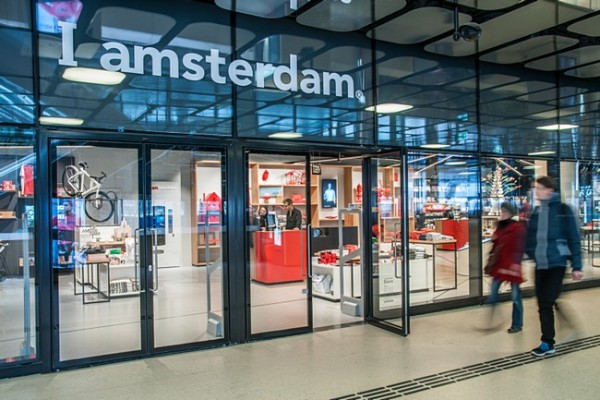
I amsterdam Store is the place to pick up great Amsterdam keepsakes and your I amsterdam City Card. Photo by Koen Smilde courtesy I amsterdam
You’ll find bicycles everywhere in Amsterdam. Although officially a mode of transportation, the bicycle has also become part of the city’s culture. Just under 750,000 people are living in the city of Amsterdam, and officials estimate there are more than 881,000 bikes in the city. Bikes are ideal for navigating the city’s streets, barely more than a network of pedestrian paths.
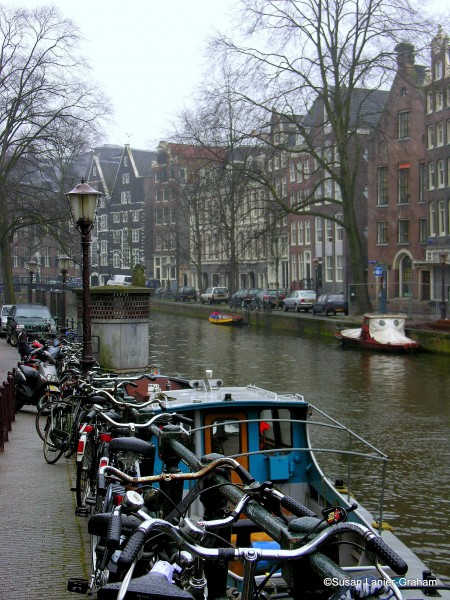
Bikes along an Amsterdam canal. Photo by Susan Lanier-Graham
There are numerous spots where you can rent bikes, and the shops will help you map out a route that will let you take in the city. Remember that when you’re walking, bicycles have the right of way in Amsterdam.
While the canals were once the primary means of transportation in the city, you won’t find yourself hopping on a boat to get uptown. However, you should take a canal cruise to experience the charm of what was once Europe’s richest city. 90-minute trips are offered throughout the day. They start from Damrak at Centraal Station. Check on times and pricing there.
Shopping in Amsterdam
With more than 10,000 shops, 141 galleries, 165 antique shops, and 25 markets, Amsterdam offers endless shopping possibilities. From department stores to specialty shops to fashionable boutiques, you’ll find something for everyone.
Amsterdam is especially famous for its specialty shops—each selling items as unique as kites, toothbrushes, or chocolate. The best place to explore the small shops and galleries is among the narrow streets meandering off from the main canals.
For those who prefer to visit more upscale shops, catch the Bijenkorf on the Damrak, the Magna Plaza shopping gallery in the restored main post office just behind the Royal Palace, and Metz & Co. on the Leidsestraat.
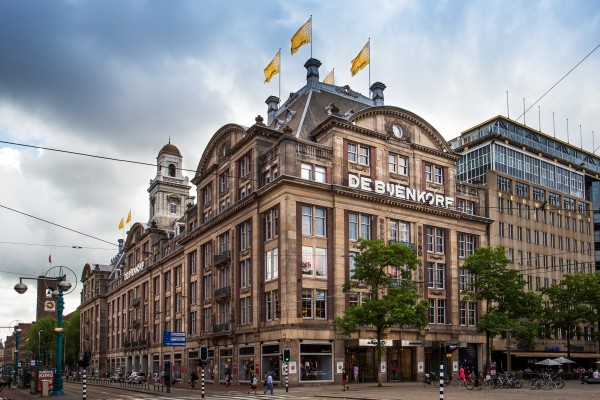
De Bijenkorf Amsterdam. Photo courtesy DIEDERIK VAN DER LAAN
Amsterdam’s diamond dealers are some of the world’s most prestigious. Diamond merchants from around the world bring valuable stones to Amsterdam, where the stones become dazzling jewels. You’ll find impressive diamond deals and other precious stones throughout the city.
Amsterdam is also a goldmine for those searching for art and antiques. Explore some of Europe’s finest art and antiques dealers along the Spiegelkwartier leading to the Rijksmuseum.
If you prefer bargain shopping, you’ll find plenty of deals in Amsterdam. The largest market, Waterlooplein Market, is a world-famous flea market known as much for entertainment as bargain hunting.

Amsterdam Waterlooplein Flea Market. Photo by Incase Designs from Los Angeles, via Wikimedia Commons
Visit the world’s only floating flower market along the Singel Canal. You might also want to catch the Philatelist Market on Wednesdays and Saturdays and the Amsterdam Book Market every Friday.
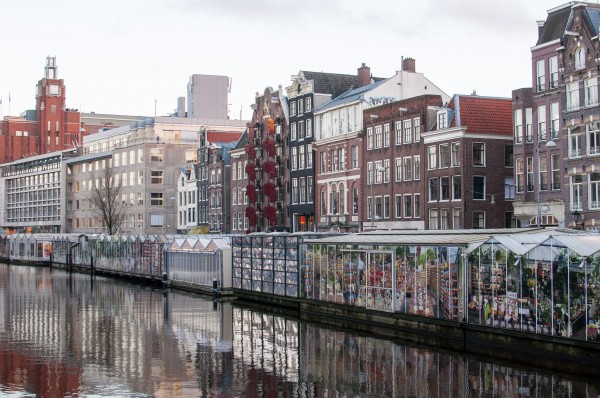
Amsterdam Bloemenmarkt is the world’s only floating flower market. Photo by Bo&Ko via Creative Commons
Shops in the city center are open Tuesday through Saturday from 9 AM to 6 PM, Thursday from 9 AM to 9 PM, and Sunday from noon to 7 PM. Most shops don’t open until 1 PM on Mondays.
Nights in Amsterdam
After a day of shopping and wandering through museums, you can sit, relax, and enjoy dinner at one of Amsterdam’s many restaurants.

Amsterdam Avond Bridge. Photo by Koen Smilde courtesy I amsterdam
Eating is steeped in tradition in Amsterdam. After breakfast and lunch of bread and cold meats, you’ll want to kick off the evening with the Borrel (a social drink with friends). At 5 PM, locals gather to enjoy a glass of beer, a nip of Dutch jenever (Dutch gin), or a glass of wine with cheeses, nuts, and crackers.
Dinnertime meals are varied, and you can find almost anything in Amsterdam’s restaurants. Be sure to try a bowl of traditional Dutch pea soup (erwtensoep). For classic Dutch fare, check out Tomaz in the Medieval Quarter. An interesting twist in Dutch cooking is the influence of Indonesia’s Spice Islands on local cuisine. A classic example is the “rijsttafel” (rice table)—a beautiful array of 20 tangy little dishes served with rice and Dutch beer. For the best marriage of Dutch and Indonesian cuisine, check out Café Kadijk.
Perhaps you’d prefer to grab a quick bite and spend the evening in one of Amsterdam’s “brown cafés” (bruine café). It’s one way to discover the heart of the city. These traditional pubs, with their dark interiors, are world-renowned. They can be large taverns serving thousands each year or tiny bars that survive with the patronage of a few locals. Whatever the size or location, brown cafés share several common traits—the walls and ceilings have turned brown from age and cigarette smoke, there are usually some historical claims to fame, and there is never any music.
When you step inside, sit back, down a couple of beers with the locals, and let them regale you with stories. You might try Café Karpershoek, which opened in the early 1600s and still sports sand floors. It’s said to be the oldest bar in Amsterdam. Whether you choose this classic or one of the dozens of others throughout the city, remember that Dutch beer should have a modest layer of foam on top—two fingers thick, to be precise.
Staying in Amsterdam
Amsterdam has an abundance of small hotels and rooms for rent. If you prefer something more luxurious, book a room at Sofitel Legend The Grand Amsterdam.
The Grand is a historic hotel just off Dam Square, bordered by two canals. The hotel has 177 rooms, including 52 suites. Although the hotel only opened in 1992, the building has a colorful history. It was a convent founded in 1411, served as home to the Dutch Admiralty, and was later the Town Hall.
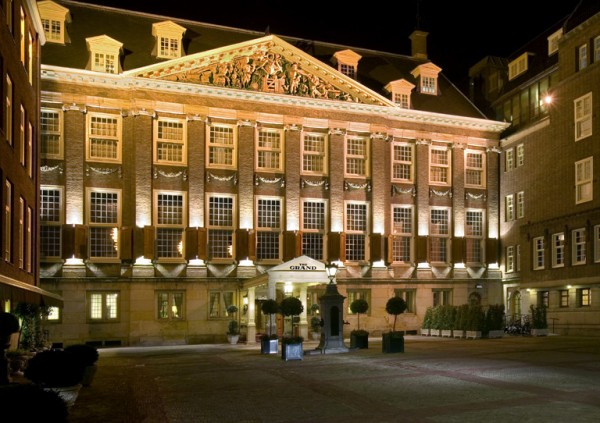
The Grand Amsterdam. Photo courtesy The Grand Amsterdam
Amsterdam has inspired artists for centuries. Somehow, the city has preserved its Old World charm and picturesque qualities. Today, you’ll find yesteryear’s charm perfectly blended with the dynamic, modern Amsterdam of the 21st century.
Fall Under Amsterdam’s Timeless Spell
From canal-side strolls and Golden Age masterpieces to cozy brown cafés and unforgettable culinary experiences, Amsterdam invites travelers to slow down and savor every moment. Whether you’re exploring world-famous museums, cruising historic waterways, or simply watching bicycles glide across centuries-old bridges, the city offers endless opportunities for discovery. For more inspiring European getaways, cultural city escapes, and unforgettable food and wine experiences, visit Wander With Wonder and start planning your next adventure.

0 Comments