
More than the jumping-off point to Machu Picchu, discover all the port city of Lima, Peru has to offer in this ultimate guide.
For many travelers, the capital city of Lima is the jumping-off point for Cusco, Machu Picchu, and the rest of Peru. But this city of more than 11 million people is a destination in its own right, with a historic center designated a UNESCO World Heritage Site in 1988, pre-Incan ruins at bustling intersections, and a gastronomy scene that is taking the world by storm. As a guest of Iberostar Selection Miraflores, I spent several days discovering the city. Read on for my ultimate guide to two days in Lima, Peru—or consider booking Peru travel packages to arrange an unforgettable visit.

Miraflores in Lima, including the new Iberostar Selection Miraflores where I stayed. Photo courtesy of Iberostar Selection Miraflores
Cultural Sights in Lima, Peru
Located on the coast, Lima has 43 neighborhoods, including the popular tourist district of Miraflores. Its residents come from all over the world, including descendants of the original Spanish settlers, African slaves, and those from China and Japan. People from the Andes relocate to the city for jobs, while others from South America, especially Venezuela, come for a better life.
Despite this diversity, many of the cultural and historical sites in the city deal with the pre-Incan civilizations that once inhabited the area and the Spanish who came later. Visiting these sites provides a good overview before heading to Machu Picchu if Lima isn’t your final destination.
Larco Museum
If you visit one museum in Lima, make it the Larco Museum. Housed in an 18th-century mansion, the museum maintains a collection of more than 45,000 pre-Columbian pieces, including headdresses, gold jewelry, and pottery. It’s not a particularly large museum since only 5,000 pieces of the collection are in the gallery’s main display area. However, the Larco Museum displays the other 40,000 massed together on shelves behind glass in the storage area.

The Larco Museum in Lima, Peru. Photo by Teresa Bitler
Anyone who has watched Anthony Bourdain’s Parts Unknown visit to Lima will recognize the Larco Museum for its Galeria Erotica. The gallery is exactly what you’d expect: a collection of clay figurines engaged in almost every sexual activity imaginable. If you’re not visiting with kids, it offers an interesting look into the lives of these ancient people.

A golden headdress is on display at the Larco Museum in Lima, Peru. Photo by Teresa Bitler
Time your visit to include lunch at the onsite café, which serves traditional Peruvian foods as well as more Americanized fare. On my visit, I saw multigenerational local families dining here for special occasions.
Museo Nacional de Arqueologia, Antropologia e Historia del Peru
The National Museum of Archeology, Anthropology, and History in Peru is the nation’s largest and oldest. It contains exhibits on the pre-Incan, Incan, colonial, and republican periods. While it doesn’t have as much English signage as the Larco Museum, it does have approximately 300,000 artifacts. Watch for mummies, ceramics, and dioramas of the Amazon and sites like Machu Picchu. The textile displays are excellent.

The National Museum of Archeology, Anthropology and History in Peru celebrates all things Peru. Photo courtesy of chiravi via Pixabay
If you have to choose between the Larco Museum and the Museo Nacional de Arqueologia, Antropologia e Historia del Peru, visit the Larco Museum. However, if you have the extra time, this museum won’t disappoint.
Casa de Aliaga
Open by appointment to tour groups, this home has been in the Aliaga family since 1535, when Spanish conquistador Francisco Pizarro gifted the land to his friend, Jeronimo de Aliaga y Ramirez. The family still lives in the home today in more modern areas, but the rooms that are open to the public showcase treasures from their past. Those treasures include paintings of family members, ornately carved furniture, and lots of Seville tile.

The courtyard of Casa de Aliaga. Photo by Teresa Bitler
I loved the courtyard with its fountain and a two-story tree over 200 years old. From the balcony in the courtyard, you can see the entrance to the wine cellar and the tunnels that connect to the governor’s place. My guide told me that, in the past, governors could escape civil unrest through those tunnels and hide at Casa de Aliaga. I’d be happy just to sip a few pisco sours, the national drink of Peru, here in the courtyard.
Magic Water Circuit
The Magic Water Circuit consists of 13 illuminated water fountains in the Parque de la Reserva. The highlight is the park’s 130-yard-long Fantasia Fountain, which has been the largest fountain in the world until recently, and the fountain’s light show, which is choreographed to music.

The Magic Water Circuit in Lima. Photo courtesy of Darren Lawrence via Pexel
Unfortunately, I didn’t see the Magic Water Circuit because it was too far to walk there from the Iberostar Selection Miraflores. Lima currently doesn’t have a subway, and my guide warned me not to take the buses. Taxis and rideshare are options, but most drivers don’t speak English. Your best bet is to hire a guide to take you, something I plan to do the next time I visit.
Historical Sights in Lima, Peru
From pre-Incan ruins to Spanish government buildings and cathedrals, Lima is full of historic sites. If you are interested in history, I recommend hiring a guide, like Lima Tours, to transport you to these sites and explain the significance of what you see.
Plaza de Armas
Also known as the Plaza Mayor, this historic city center dates back to Lima’s founding in 1535 and is a UNESCO World Heritage Site today. My guide first took me to the Cathedral de Lima, the burial place of Lima’s founder, Francisco Pizarro.

The bones of Lima’s founder Francisco Pizarro in the Cathedral de Lima. Photo by Teresa Bitler
Next, we walked past the Governor’s Palace and down Union Street, where Casa de Aliaga is located. A block away, the Monastery de Santo Domingo houses monks who are too old to serve anymore. It has an impressive library and displays of Peru’s saints.
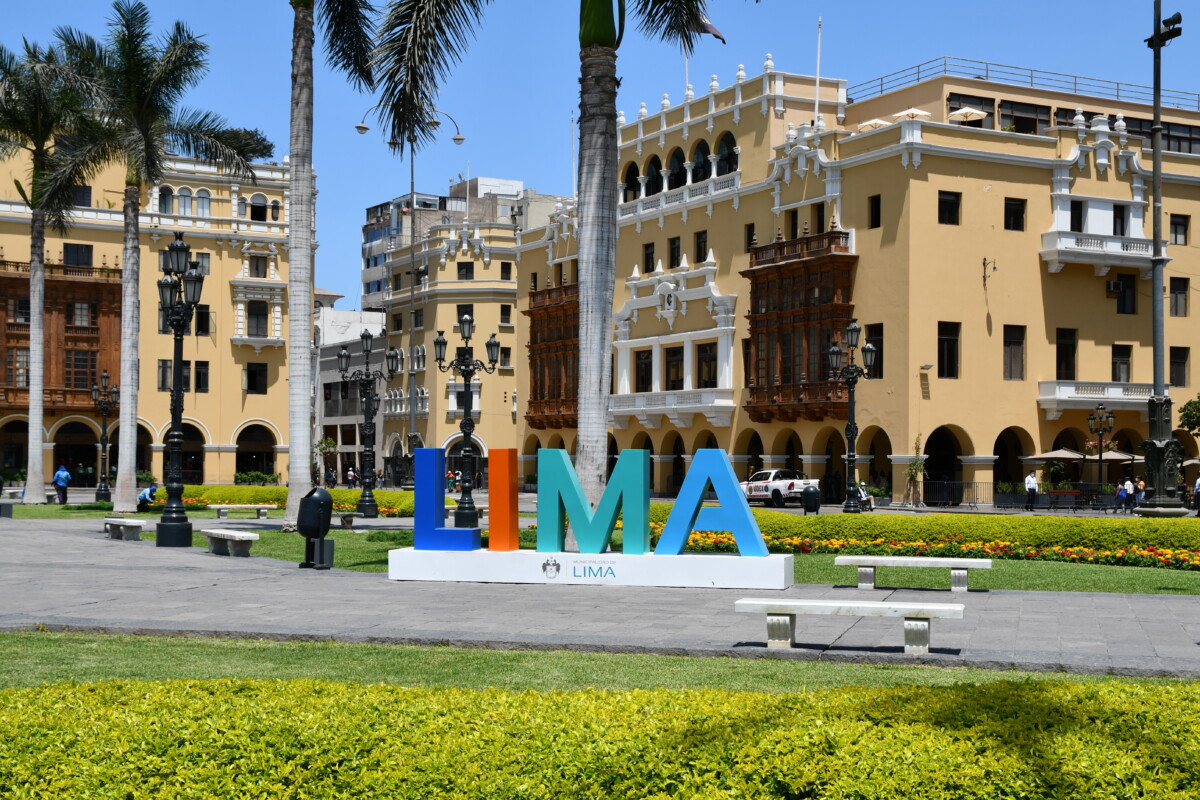
The historic Plaza de Armas in Lima, Peru. Photo by Teresa Bitler
When I was there, the actual plaza was closed. You could walk around its perimeter, stopping at the Cathedral de Lima, but the police wouldn’t let us stand in front of the Governor’s Palace at 11:30 AM for the changing of the guards.
Huaca Pucllana
Dedicated to the ancient god Pachacamac, this pyramid in the middle of Miraflores is made of millions of sun-dried bricks. As you drive past, it’s an impressive and unexpected sight, but you’ll need to book a guided tour through the Huaca Pucllana website to truly appreciate it. On a tour and visit to the site’s museum, you’ll learn about the people, how they worshipped the sea, and how they constructed the structure here.

The pre-Incan ruins of Huaca Pucllana in Lima, Peru. Photo courtesy of rdlncl via Pexel
In addition to daytime visits, the site opens Wednesday through Sunday for after-dark tours. Make it an evening—an onsite restaurant serves traditional Peruvian dishes with views of the ruins.
Monastery de San Francisco
A Peruvian told me the one place I had to visit in Lima was the Monastery de San Francisco. That’s because the remains of an estimated 70,000 people rest in its catacombs, which you can visit. While I didn’t make it, I did visit the catacombs at the Cathedral de Lima. My guide explained that only the priests and members of Lima’s influential families were allowed to be buried at the Cathedral de Lima. Meanwhile, the Franciscan friars at the Monastery de San Francisco allowed anyone to be buried there.

The Monastery of San Francisco with its catacombs underneath. Photo courtesy of PoliMetraletta via Pexel.
The Monastery de San Francisco is about a 10-minute walk from the Plaza de Armas, so it’s possible to visit both cathedrals. However, the Cathedral de Lima doesn’t actually allow you to venture into the catacombs. Instead, you look into the burial plots where several remains are visible. You can also see the pit where bodies once decomposed. The Monastery de San Francisco lets you go into the actual catacombs.
Shopping in Lima, Peru
I’m not a shopper, but I did set aside some time to shop in Peru. Why? I’m fascinated by local markets, especially when I can find local crafts for less than you’d pay in tourist areas. Here are two I visited and recommend.
Artists’ Shops on Petit Thouars Avenue
Just north of Kennedy Park in Miraflores, you can score a deal on jewelry, alpaca scarfs, carved wood, and other souvenirs. The prices were all reasonable. I purchased a scarf made from baby alpaca wool for $30 USD, significantly less than the $60 I saw for a similar one at a local museum’s gift shop and the $80 for one at the airport. I’ve heard the prices are even higher in Cusco and Machu Picchu.

Textiles like these can be found in the craft shops along Petit Thouars Avenue. Photo courtesy of steta via Pixabay
To get to these shops, take Arequipa Avenue north past Kennedy Park to Narciso de la Colina Street. Turn right and take the first left to the shops on both sides of the street. All of the vendors I encountered accepted debit and credit cards, so there’s no need to exchange dollars for sols.
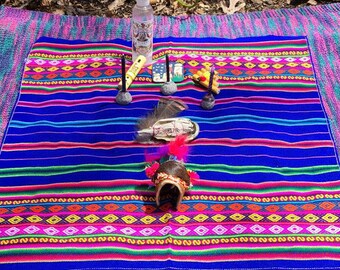
Andean Mountain Textile Peruvian Handwoven Aguayo Mesa Cloth
Mercado nro 1 de Surquillo
A fresh food market, Mercado nro 1 de Surquillo showcases fresh Peruvian ingredients. I saw dozens upon dozens of different potatoes, exotic fruits from the Amazon, and grubs inching around a plastic blue bowl. You can even select fish for some of the freshest ceviche you’ll ever eat. When I said I wanted to try this on my next visit to Lima, my guide cautioned it might upset my stomach since I wasn’t used to Peru’s water and spices. I might risk it anyway.

A vendor points to racacha, a root vegetable she picked in the Amazon. Photo by Teresa Bitler
Outside, craft vendors line the street to your left, and small working-class restaurants where you can get a complete meal for under $5 stretch towards the intersection. Don’t venture off as the area turns rough quickly.
Other Places to Check Out in Lima, Peru
Lima has other museums and attractions worth checking out, too, from the Gold Museum of Peru (Museo Oro del Peru) to Love Park, a coastal park that celebrates love with the sculpture of an entwined couple. But if you have the time for a day trip, these destinations are a must.
Nazca Lines
These geoglyphs in the Nazca Desert depict plants and animals, including a monkey and a fish. You’ll have to take an aerial tour from Lima to see these drawings, but their massive scale will impress.

The Nazca Lines near Lima, Peru. Photo courtesy of monikawl999 via Pixabay
Ballestas Islands
Known as the Peruvian Galapagos, these rocky islands, three hours south of Lima, are home to sea lions, penguins, and dolphins. Book a tour with a Lima company that can drive you to where you’ll board boats to visit the islands.

The Ballestas Islands are known as the Peruvian Galapagos. Photo courtesy of Taik Lee via Pixabay
Huacachina
Also south of Lima, Huacachina is one of the world’s premier spots for sandboarding and desert dune buggy tours. A trip here can often be combined with a flyover of the Nazca Lines or a boat trip to the Ballestas Islands.

The renowned sandboarding destination, Huacachina, is near Lima, Peru. Photo courtesy of Juan Carlos Requejo Gallego via Pixabay
Where to Stay in Lima, Peru
I stayed at the new Iberostar Selection Miraflores. Opened in October 2021, this five-star hotel makes a great base for exploring Lima—it’s within walking distance of the ocean, shopping, and fine dining—or a posh overnight (or two) before continuing to Cusco and Machu Picchu. The rooms are comfortable and quiet. Not only did I enjoy the spa but I appreciated the filtered water dispenser on each floor.

A room at the Iberostar Selection Miraflores. Photo courtesy of Iberostar Selection Miraflores
The food here is exceptional. Ortega & Huaman, the hotel’s premier restaurant, serves traditional Peruvian foods like lomo saltado, a Peruvian beef stir fry, and fresh fish ceviche. Upstairs, the rooftop bar 27 Tapas focuses on small plates with Peruvian influences. And, of course, the bar crafts amazing pisco sours, the national drink of Peru.
Note: Locals flock to the rooftop bar to watch the amazing sunsets over the ocean. Although hotel guests have priority, come early to score a seat.

A no-filter sunset was taken from the rooftop bar at Iberostar Selection Miraflores. Photo by Teresa Bitler
How to Explore Lima, Peru
Because Lima is located south of the equator, its weather is the opposite of ours in the Northern Hemisphere: winter is June, July, and August, while summer is January, February, and March. On average, the temperature fluctuates between 80 and 60 degrees Fahrenheit. Don’t be surprised at how overcast Lima is. According to my guide, it rarely rains.

A statue in Kennedy Park—a sanctuary for stray cats earned it the nickname Cat Park. Photo by Teresa Bitler
Flights land at Jorge Chavez International Airport, 45 minutes to an hour from Miraflores. I strongly urge you to ask your hotel or tour company for transportation recommendations. Do not rent a car. Lima drivers treat lane designations as suggestions, and I saw cars in the lane to my driver’s right turn left in front of him on multiple occasions. When I commented on the driving, my guide said their tour company once received a call from someone who gave up trying to drive his rental less than a mile from the airport.
If you don’t make arrangements for a driver, use a taxi or rideshare app for your transportation needs. Just realize these drivers may not speak English, and there aren’t a lot of rideshare services in Lima. You may have longer waits than you’d expect for them.
Articles Related to Exploring Lima, Peru
- Eco-Lodge in Guyana: Adventure in the Amazon River Basin
- Budget-Friendly Tips for Traveling Through Rio de Janeiro
- Exploring the Barranco District in Lima
- 4 Must-See Sights and Activities in Peru
- Remembering Mendoza: Discovering Argentina
- Cruising Tierra del Fuego Chile
- Grace Cafayate: Luxury in Argentinian Wine Country
- Ultimate Guide to 2 Days in Medellín
- Ultimate Guide to 2 Days in Santiago
Making the Most of Your 2 Days in Lima, Peru
So, how long should you spend in Lima? I suggest staying at least two full days, although you could quickly expand your visit with day trips to Ballestas Islands, Huacachina, and the Nazca Lines. You could even visit the pisco-producing region of Pisco or Peru’s wine country from Lima. This ultimate guide to two days in Lima, Peru, covers the highlights.
Be sure to check out Wander for suggestions as you plan your next 2-day getaway somewhere exotic or closer to home.

.

0 Comments