
If you’re one of the thousands who plan to visit Arizona during Spring Break for the great weather, there are just a few things you need to know about the Grand Canyon State that can help you have a memorable trip. First, we check out some of the myths you often hear about Phoenix and Arizona.
Myth 1: Scorpions are Deadly
We’ve all seen the Hollywood horror movies where someone dumps a poisonous scorpion on someone to kill them in an instant. Sorry to disappoint, but that’s not the way it is here in Arizona. A scorpion sting is actually rare but in the unlikely event you come across one, they are not really deadly. Okay, to be fair, there is a slight chance, but it’s also likely that some people will die from a bee sting.

A frontal view of the Bark Scorpion of Arizona. Photo credit: Wikipedia
Out of the approximately 100 scorpion species found in the United States, only the Arizona Bark Scorpion – Centruroides sculpturatus – possesses venom that is toxic enough to cause human fatalities. Fatal stings are rare, however, in the United States. According to the University of Arizona, Cooperative Extension, no fatal scorpion stings have occurred in the United States in 20 years. Furthermore, according to Health24.com, less then 5% of scorpion stings result in symptoms requiring medical attention. Anti-venoms, improved medical protocols, and greater knowledge of scorpions have reduced the chances that stings will be fatal.
Most scorpion stings are similar to that of a wasp sting.
Myth 2: It’s Always Hot in Arizona
Contrary to popular opinion, it’s not always hot in Arizona. In fact, you should bring a jacket when you travel to Arizona in March, because the weather can be cool in the evenings.
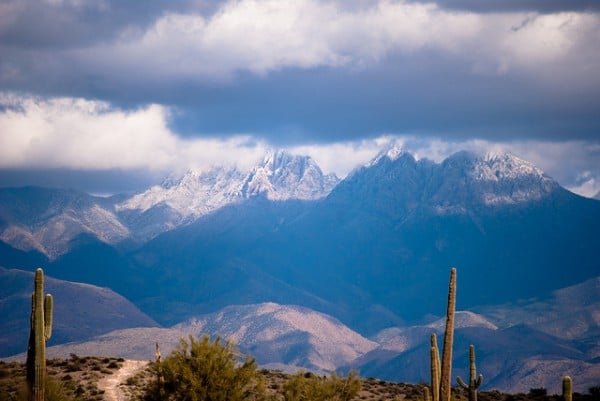
Arizona Mountains on Highway 87. Photo by Danny Smitherman courtesy Creative Commons
While our weather here in Arizona is much better than what you’ll find in, say, Chicago in March, it can get cool. If you stay in the Phoenix area, March highs are around 75 degrees F while lows drop to mid-50 degrees F. Once the sun goes down, the air can feel cooler in the desert than the same temperature might feel on the East Coast. We do sometimes get snow in the Valley of the Sun, but it usually melts almost as fast it falls, although the mountains around Phoenix can have a dusting of snow for several days during the winter. Check out the average temperatures for March here.
If you plan to head north to Flagstaff or the Grand Canyon, the highs stay around 55 degrees F while nights can dip to about 20 degrees F. An occasional snowstorm has been known to happen in March. Of course, let me be the first to say that the weather here is usually pretty darned nice during Spring Break.
Myth 3: Arizona is all Deserts and Cactus
One of the most amazing things about Arizona, and one of the reasons I love it here, is the diverse landscapes.
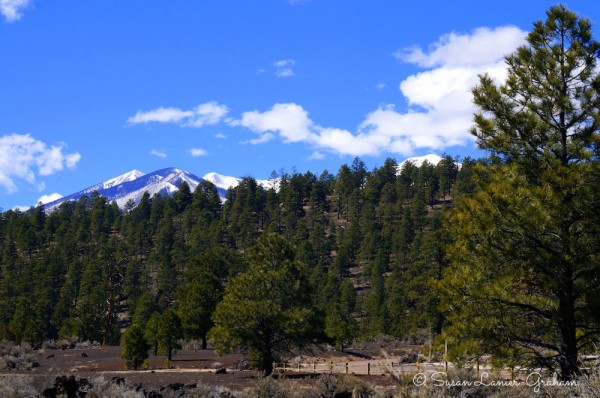
The mountains outside Flagstaff. Photo by Susan Lanier-Graham
While we have plenty of deserts with cactus and rugged mountains, the state also has towering mountains, massive pine forests, breathtaking red rocks, and enchanting canyons with flowing streams.

Sedona’s Red Rocks. Photo by Susan Lanier-Graham
You can find the pine forests about 2 hours north of Phoenix in Flagstaff, which is home to Northern Arizona University, the Snowbowl ski area, and nearby Sunset Crater. The red rocks are the trademark of Sedona, about 90 minutes north of Phoenix. Sedona has great spas, restaurants, art galleries, and hiking.
Myth 4: You Can Run Up to the Grand Canyon For the Day
Which brings us the myth that everything is close in Arizona. We live in a huge state. While we might only have 6.5 million citizens making us the 15th most populous state in the country, we happen to be the sixth-largest state covering nearly 114,000 square miles (compare that to Rhode Island with 1545 square miles of land). You can’t really make a trip from Phoenix to the Grand Canyon in one day. If you do, it will be a whirlwind and you won’t have a chance to truly enjoy the amazing scenery.
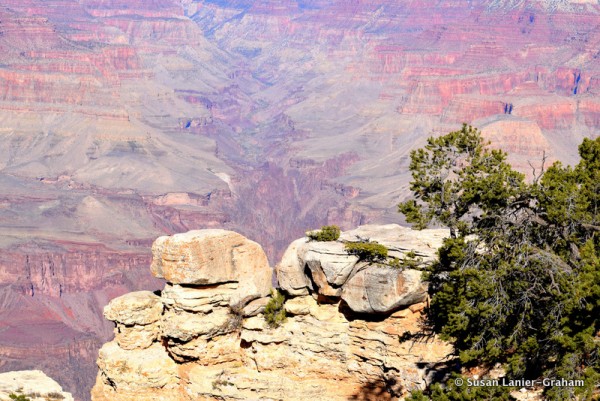
Views over the Grand Canyon. Photo by Susan Lanier-Graham
If you plan to visit the Grand Canyon during your Spring Break trip to Arizona, plan to head up early in the morning. The drive takes a minimum of 3.5 hours each way. If you want time to visit the canyon, you might want to arrange to stay in Flagstaff or Williams for the night and continue the visit or make the return trip on the second day.
Myth 5: Everyone in Arizona is Over 65
Contrary to popular opinion, Arizona is actually quite young. There are 6.7 million citizens in the state and 24.4 percent of the popular is under 18 with the average age statewide of 35.9, making it one of the youngest states in the nation.

Pool Party in Arizona. Photo courtesy David Graff via Creative Commons
True, there are some retirement enclaves in the Valley—Sun City, Sun City West, and Green Valley—where the age is much older (about 73), but the majority of cities hover between 30 and 35, including Chandler, Mesa, Maricopa, Tempe, and Glendale. Even once-aging Scottsdale now has a median age of 40.6 years.
Myth 6: There’s no Culture in Arizona
Arizona has a plethora of performing arts events at some amazing venues throughout the year. We have Broadway shows, ballet, symphony, theater, and more.

Chandler Center for the Arts. Photo courtesy Chandler Center for the Arts
Some of my top picks (some are venues, others are performances):
- Arizona Broadway Theatre
- Ballet Arizona
- Celebrity Theatre
- Chandler Center for the Performing Arts
- Del E Webb Center for the Performing Arts
- Fox Tucson Theatre
- Gammage Auditorium
- Hale Theatre Arizona
- Herberger Theater Center
- Marquee Theater
- Mesa Arts Center
- Orpheum Theatre
- The Palms Theatre
- Phoenix Symphony
- Phoenix Theatre
- Scottsdale Center for the Performing Arts
- Scottsdale Desert Stages Theatre
- Tempe Center for the Arts
Myth 7: Take An Hour to Hike Camelback Mountain
Finally, there are some great places to go hiking in Arizona. There are many urban trails. Here is a great list of some of the trails in Phoenix.
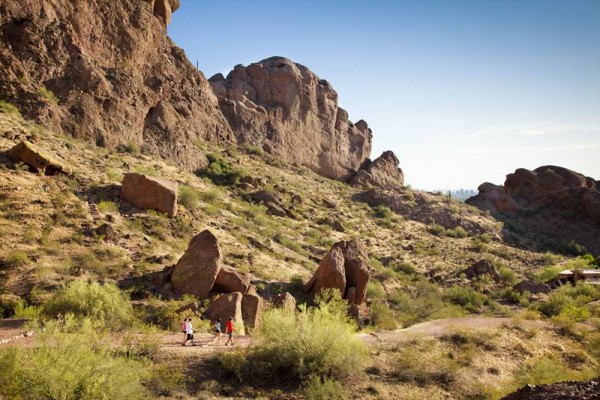
Echo Canyon at Camelback Mountain. Photo courtesy Phoenix CVB
We are surrounded by rugged mountains that make for great hiking. Some of the best mountain hikes right here in Phoenix include:
- Tom’s Thumb/McDowells
- Papago Park
- Piestewa Peak (formerly Squaw Peak)
- Phoenix Sonoran Preserve
- South Mountain Park
- Pinnacle Peak
- Camelback Mountain
- Mormon Trail/Hidden Valley
- Lost Goldmine Trail in the Superstitions
- Shaw Butte
- Peralta Canyon Trail, Superstitions
With the great weather here in the Valley of the Sun, many people think they can “hike Camelback” in an afternoon. The mountain looks easy from the base and many people assume it’s an easy hike because it’s right here inside the city limits. Looks—and the desert—can be deceptive. The hike up Camelback Mountain is difficult. Remember that even in March, the air here is dry and the sun can get hot as you head up the side of the mountain, so take plenty of water with you. Don’t go up the trail alone. The hike is very rocky and quite steep, so be sure you wear sturdy shoes. There are multiple rescues off Camelback every year and people have died because they weren’t prepared. It’s an amazing way to enjoy the scenery and see the surrounding desert, but do be smart.
Enjoy your trip to the Grand Canyon State and be sure to let me know what you enjoyed most about your visit to Arizona. For more ideas on traveling in Arizona, see these articles by Wander writers.

Great list, Susan. So glad you pointed out that Arizona is not all desert. One of my fun facts for out of town guests is that Arizona features all of the world’s biomes except a tropical rain forest. Yep, we even have the tundra up on San Fran Peaks!