
Planning a Masai Mara safari? Discover when to visit, what to expect on game drives, where luxury meets wilderness, and how to prepare for Kenya.
Something shifts as you leave Nairobi. The pavement ends, the horizon opens, and the city noise gives way to tall grass moving in the wind and animal calls somewhere you can’t quite place. It’s a sharp contrast, and if you want help navigating that transition from city hotels to remote camps, this connoisseur’s guide to Kenya’s untamed luxury is a good place to start. Still, nothing quite prepares you for how big the Masai Mara actually is. It changes how you see wild country — a place that feels ancient and very much alive at the same time.
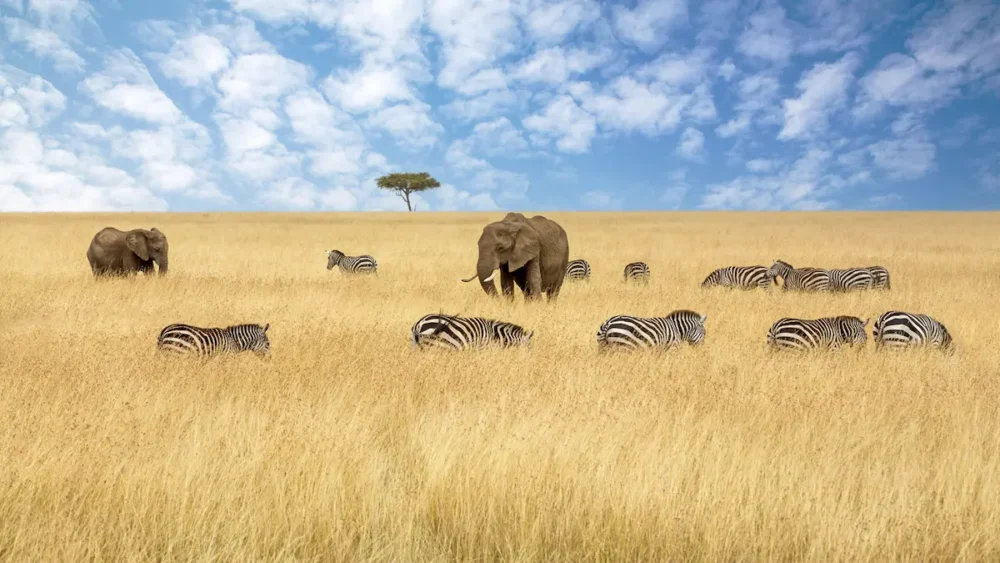
Nothing quite prepares you for how big the Masai Mara actually is. Photo by Rixipix courtesy iStock via Getty Images
Discover the Magic of Masai Mara National Reserve
The Masai Mara National Reserve sits in Kenya’s southwestern corner and forms the northern end of the Serengeti-Mara ecosystem. It’s famous for good reason. Rolling savannah and flat-topped acacias give you a landscape you’ll recognize instantly and still find surprising in person. Wildlife viewing here isn’t about hunting for hours to spot one animal. The plains are full.
You’ll see elephant herds moving quietly through the brush, giraffes reaching for the high leaves, lions flat out in the midday sun. With that many predators and that much prey in one place, every game drive turns up something you didn’t see yesterday. A cheetah breaking into a sprint, a family of warthogs trotting through mud — the daily business of survival plays out a few meters from your vehicle.
Choose the Right Masai Mara Safari Itinerary
One of the biggest misconceptions about planning a safari is that you need weeks to see anything worth seeing. A month spent working through the whole country sounds wonderful, but most of us don’t have that. You can fit a great deal into a short window.
If your time is tight, a well-run three-day getaway to the reserve gets you straight into it. Guides who work these plains daily know where the animals are concentrated this week, so you use your hours well instead of driving around hoping. You still get the dawn game drives, the sundowners over the plains, and a real shot at the Big Five. You don’t need an unlimited vacation allowance for this trip to land.
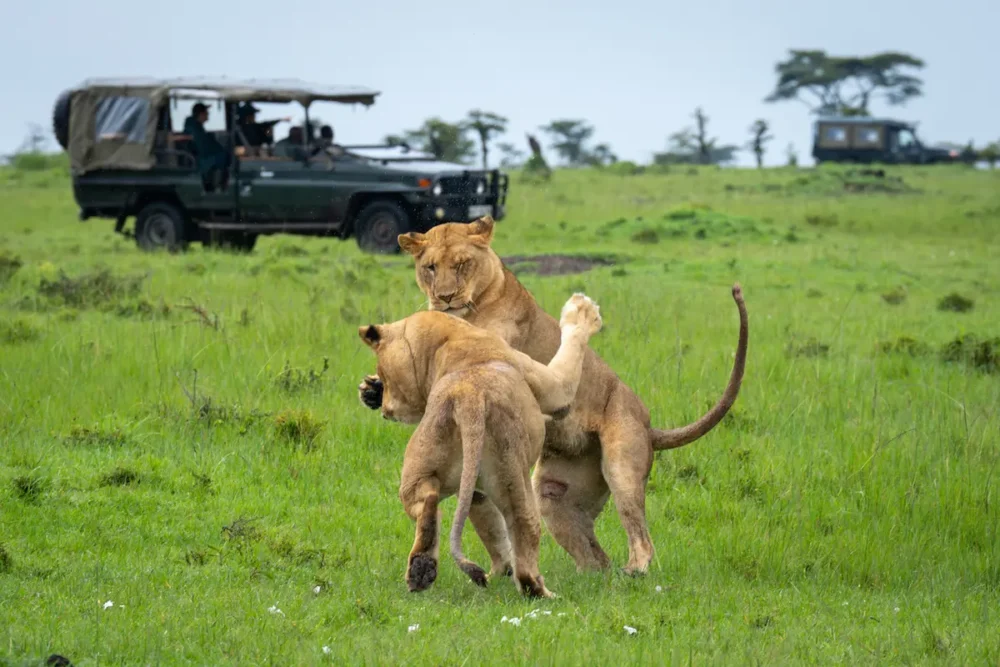
Guides who work these plains daily know where the animals are concentrated this week. Photo by nicholas_dale courtesy of iStock via Getty Images
Experience Luxury in the Wilderness
Sleeping in the wilderness no longer means giving up comfort. Kenya’s better camps hold their own against boutique hotels anywhere. Choosing a high-end wildlife experience changes the whole trip.
Picture coming back from a dusty afternoon drive to a canvas tent with a king bed, a deep tub, and a private plunge pool overlooking the river. You watch hippos wallow while someone hands you a gin and tonic. The food matches it — chefs turn out multi-course meals from local ingredients, served by candlelight under a sky with no light pollution. That combination of raw country and real comfort is what makes the modern safari work.
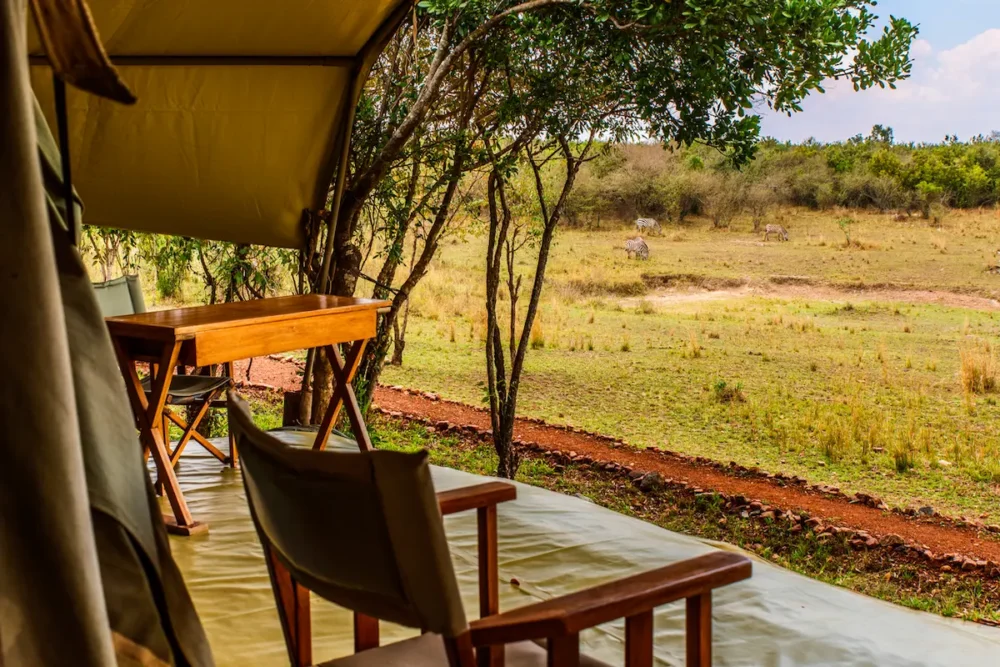
Photo by Jennifer Watson courtesy of iStock via Getty Images
Explore More of Kenya Beyond the Masai Mara
The Mara takes most of the attention, but Kenya is geographically varied enough that there’s always somewhere else worth going. Head north, and you’re in an entirely different ecosystem. Samburu National Reserve is arid, rocky, and nothing like the green plains down south.
The species change with it: Grevy’s zebra, reticulated giraffe, the long-necked gerenuk standing on its hind legs to browse. Samburusafari.com is a useful starting point for researching the northern circuits if you want a second chapter to your itinerary. The contrast gives you a fuller sense of the country, and a reason to come back.
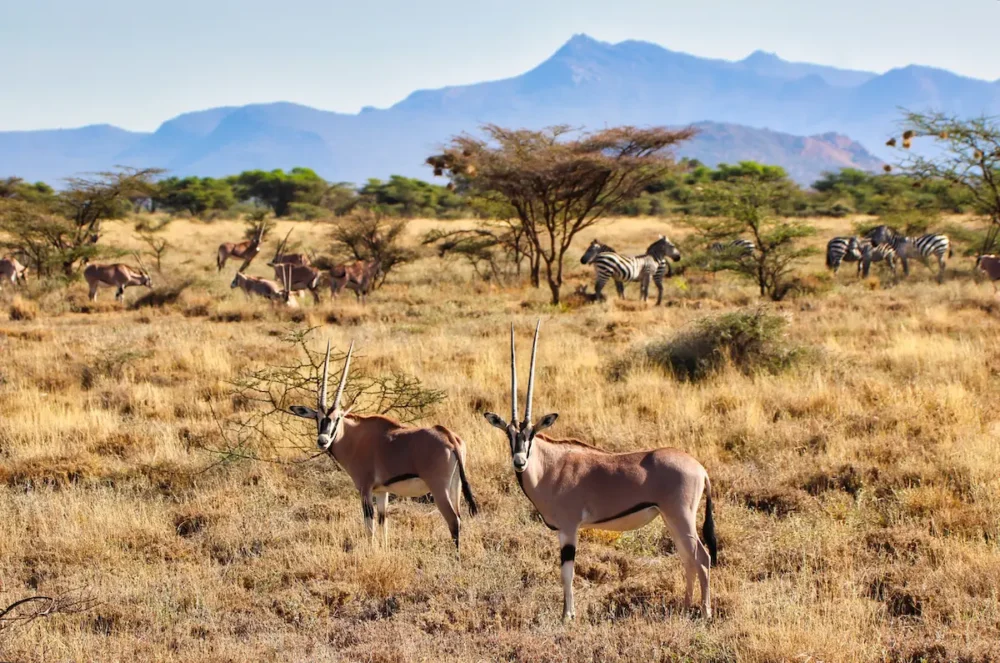
Photo by InnerPeaceSeeker courtesy of iStock via Getty Images
What to Expect on a Typical Safari Day
A safari day starts early, well before sunrise. You wake to Kenyan coffee and something light to eat, then climb into the Land Cruiser in the dark. Those first hours matter because that’s when the predators are working. The cold burns off fast as the sun comes up and turns the sky orange and pink.
Mid-morning, your guide will usually stop and set up breakfast in the bush. Bacon and eggs off a folding table with nothing but open country in every direction is one of those memories that stays put. Afternoons are for the camp — swimming, reading, a nap through the worst of the heat. Once the temperature drops, you head out again and finish the day with a sundowner somewhere with a view.
When to Visit the Masai Mara
What you want to see determines when you come. The Great Migration, when over a million wildebeest and zebra cross the Mara River, generally runs July through October. That’s peak season, and the crossings are as dramatic and chaotic as everyone says.
That said, the reserve is worth visiting all year. Come in the green season, November to May, and you get fewer vehicles, lower rates, and landscapes at their lushest. It’s also calving season, which brings its own predator-prey drama. Photographers often prefer these months for the storm skies and the color.
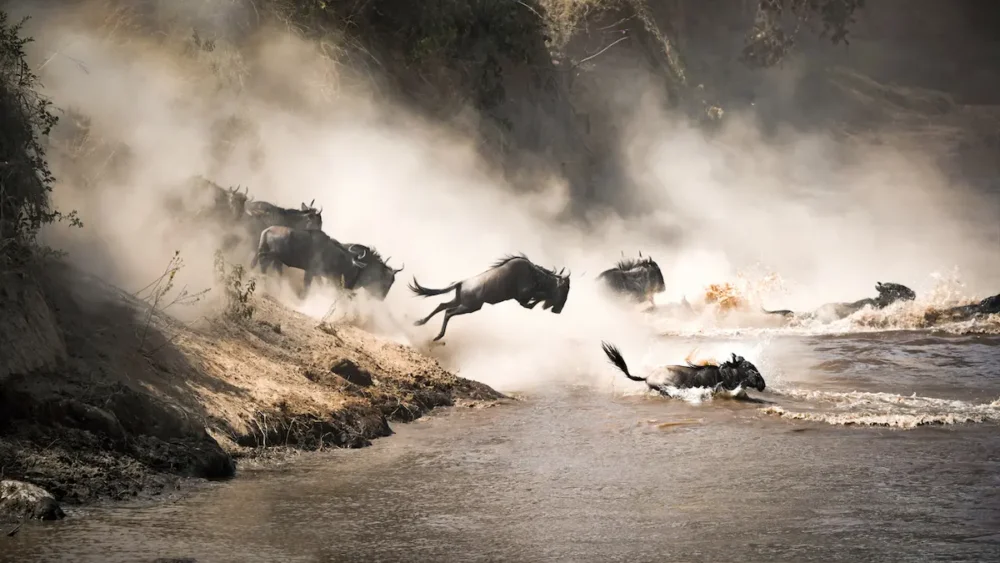
The Great Migration, when over a million wildebeest and zebra cross the Mara River, generally runs July through October. Photo by Rixipix courtesy of iStock via Getty Images
Connect With Maasai Culture and Local Guides
Beyond the animals and the camps, the people you meet are often what you remember longest. The Maasai have lived alongside this land for centuries. Many camps employ Maasai guides who can pick a leopard out of a tree at a distance that seems impossible until you watch them do it twice.
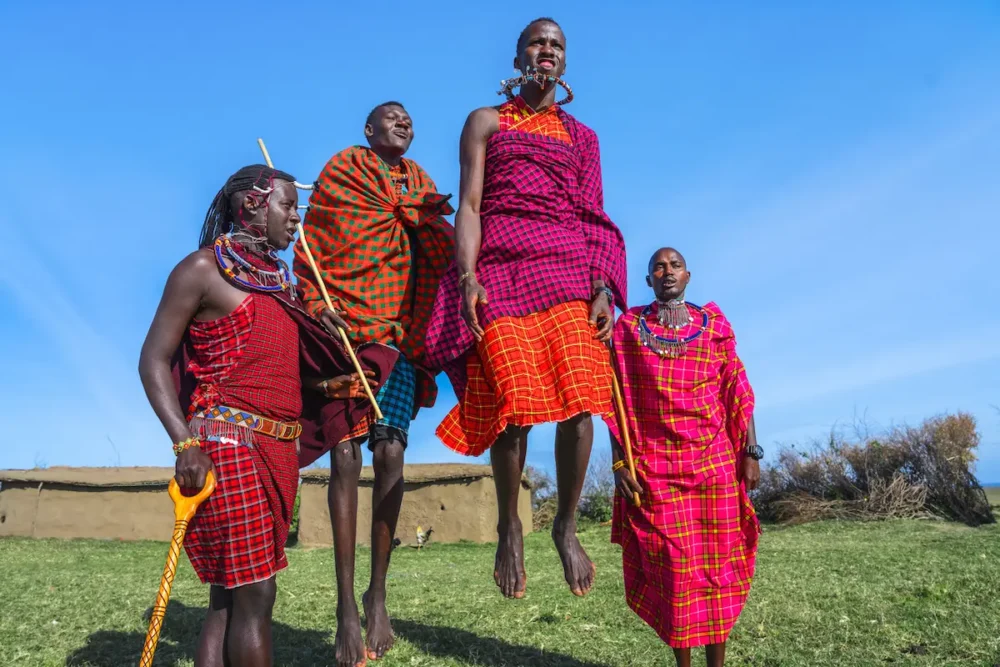
Take part in a community-led cultural experience, or simply spend time talking with your guide about their connection to the region, and the journey takes on another dimension. Photo by Mongkolchon Akesin courtesy of Getty Images.
What to Pack for a Kenya Safari
Packing for East Africa takes some thought. You’ll probably take small bush flights between camps, and they enforce weight limits. Soft-sided duffels, not hard cases. Bring layers, because mornings can be near-freezing and midday is hot. Khaki, green, and brown work best — they blend in and attract fewer insects. Skip bright colors, and skip dark blue and black, which draw tsetse flies.
And bring binoculars. Your guide will get you as close as is safe, but binoculars are what let you see the pattern on a bird’s wing or the look on a lion’s face from across a clearing.
Why a Masai Mara Safari Stays With You
A Masai Mara safari brings together remarkable wildlife, sweeping landscapes, warm hospitality, and moments hard to replicate anywhere else. Whether you spend three days in the reserve or make it one stop on a longer Kenya journey, leave room to slow down and experience the landscape, not just check animals off a list. Explore more destinations, travel tips, and inspiring journeys on Wander With Wonder as you plan your next adventure.
.

0 Comments