
Discover Porto, Portugal, and surrounding regions filled with fascinating history, magnificent architecture, and affordable, authentic food and drink.Porto’s hillsides and river valley reveal a city with an easygoing vibe, surrounded by terracotta roofs and medieval history. Portugal’s second-largest city packs a punch with its incredible food and wine scene. You can spend days wandering the narrow streets in the Ribeira neighborhood or shopping along Santa Catarina Street. Porto’s intricate, tile-lined streets also make for the perfect home base for several exciting day trips. Here are our favorite things to do in the city and four great day trips from Porto.

Terracotta tiled roofs create a colorful skyline in Porto. Photo by Margo Timberlake
Explore Dynamic Porto
Azulejo tile-covered churches are synonymous with Porto. Although the blue-and-white tiles originated in the Iberian Peninsula, the Portuguese mastered this art. The azure-glazed tiles depict religious stories and add a decorative touch to Catholic cathedrals. The 18th-century Igreja do Carmo, located in the square Praça de Parada Leitão, tells of the founding of the Carmelite Order and Mount Carmel. The square also highlights Art Deco tilework at the Armazéns Cunhas. São Bento Station, a train station in central Porto, uses 20,000 azulejo tiles to depict history, including the marriage of King John I of Portugal and Philippa of Lancaster.
Beautiful blue-and-white tiles tell religious stories at the Igreja do Carmo. Photo by Darla A. Graff
Port Tasting
Traveling is about discovery, and my husband and I found a new appreciation for port wine (in other words, we drank a lot of it!). We learned about the diversity of these fortified wines at Churchill’s Lodge across the Douro River in Gaia.
Experience the fine art of port tasting while exploring Porto. Photo by Diana Rui via iStock by Getty Images
Eat Your Way Around Porto
Foodies will rejoice at the multitude of flavors in Porto. Our love affair with Porto deepened as we sampled local delicacies on a food-and-wine-tasting tour. You must try the creamy pastel de nata topped with cinnamon. The sweet custard treat evolved as a way to use egg yolks, since the whites were used for communion wafers. The bifana sandwich, with its marinated, thinly sliced pork and spicy piri-piri sauce, topped our list of favorites. We found it tastier (and healthier) than the famous francesinha open-face sandwich, which consists of meaty layers of steak, ham, and sausages, topped with cheese, beer sauce, and a sunnyside-up egg.
Francesinha with egg is a traditional Portuguese dish. Photo by Argos42 via Creative Commons

Enjoy pastel de nata with coffee or tea at C’alma Coffee Room. Photo by Julie Dee Suman.
Sunset Cruise on the Douro River
Six architecturally stunning bridges cross the Douro River into Porto. A river cruise tour showcases the marvelous bridges and Porto’s charming landscape. We chose a sunset journey on a sailboat that meandered down the Douro River and into the Atlantic Ocean for a different view of the city.
A sunset cruise on the Douro River offers another way to experience Porto. Photo by Julie Dee Suman
Head North into the Minho Region
Portugal’s northwestern province, the Minho Region, offers fantastic day-trip opportunities. The region, considered the birthplace of Portugal, is home to important cities such as Guimarães and Braga. The verdant hillsides of the area are the source of vinho verde (green) wine.Medieval History at Guimarães
Located 45 minutes from Porto, Guimarães was established by a Portuguese warrior in the 9th century. A medieval castle, Castelo de Guimarães, was built in the 10th century to protect a monastery from Muslim and Norman raids. Here, Alfonso was born and became the first king of Portugal. You can walk along the castle walls that peer over the town. Alfonso initiated the construction of the Palace of the Dukes of Bragança during the 15th century. The great walls of the Gothic-style palace are adorned with intricate wooden ceilings that resemble a boat’s hull. Ornate tapestries hanging in the palace halls tell the story of military conquests. The palace is also the official house of the President when visiting the northern regions. In town, we wandered down ancient streets to lively Oliveira Square with its umbrella-covered tables. We snacked on sausages grilled tableside and sampled the region’s famous green wine. You’ll also find the Igreja De Nossa Senhora Da Oliveira (Church Of Our Lady Of Olive), which commemorates the battle that led to Alfonso’s proclamation as king. A miracle is said to have occurred here as a century-old olive tree began to bloom again after a sacred cross was erected.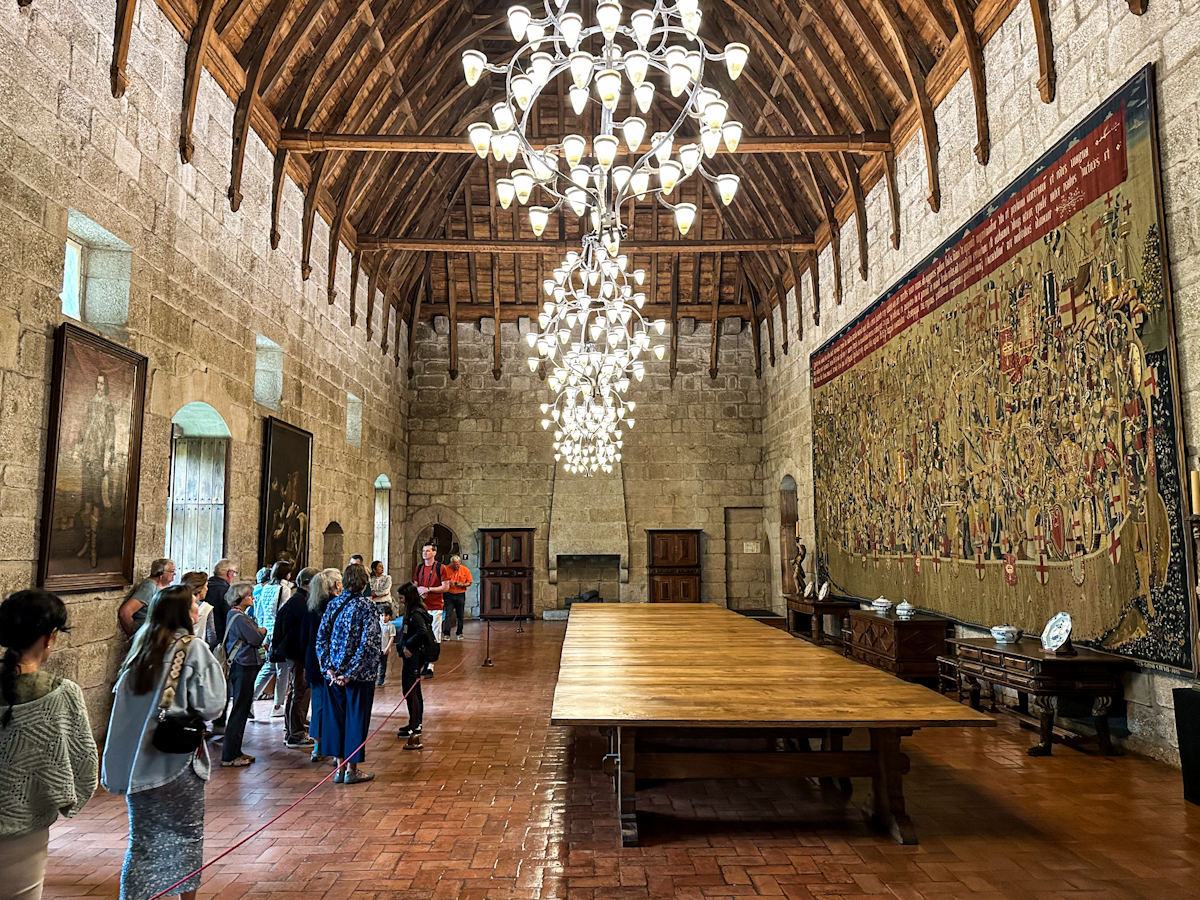
The banquet room in the Palace of the Dukes of Bragança. Photo by Julie Dee Suman
Pilgrimage to Braga
Braga, established over 2000 years ago by Augustus, was settled during the Roman era. The town is a religious center with one of the world’s oldest Catholic archdioceses. An icon of the city, the Sanctuary of Bom Jesus do Monte stands atop a sacred mountain, offering panoramic views. In the 1300s, people traveled to worship at a cross on the mountain. Over time, a chapel was established. Later, a Baroque-style church was built in the 18th century. The opulent church houses extensive reliquaries and remains a pilgrimage destination. The sanctuary is set in a lush park that houses three chapels featuring sculptures depicting the Passion of Christ. Formal gardens, statues, and fountains highlight the beauty of the forested park. You can access Bom Jesus via the park or climb the 600 steps of the elaborate zigzagging staircase. Alternatively, the oldest funicular in the world operating by water counterbalancing (no electricity) can whisk you up and down the mountain.
The sanctuary of Bom Jesus do Monte stands majestically on the mountains in Braga. Photo by Julie Dee Suman
Time for Dessert in Amarante
About one hour east of Porto, Amarante is a peaceful town along the Tâmega River. The town’s architecture boasts Renaissance, Medieval, and Romanesque styles. The Ponte de São Gonçalo (bridge) was the scene of a battle that delayed Napoleon’s march into Porto. On one side of the bridge, Igreja de São Gonçalo stands on the hillside with its gold-covered Baroque-style interior. The tomb of Saint Gonçalo, a 12th-century monk, resides in the church. Saint Gonçalo was known as a local matchmaker, finding husbands for young ladies. Today, women pray at his tomb for fertility or a husband. You’ll find pastries and cafes on the other side of the bridge. The Confeitaria da Ponte has delicious regional pastries. Sample the angels’ cheeks (papo-de-anjo) and a café on the outdoor terrace overlooking the river.
The tomb of Saint Gonçalo in Amarante. Photo by Julie Dee Suman
Douro Valley Day Trip
Stacked green terraces flourishing with grapevines cover the mountainous Douro Valley landscape. Wine production started in the valley, 60 miles from Porto, over 2000 years ago. In 1756, the valley became a legally demarcated wine region, making it one of the oldest in the world. You have many wine-producing estates (Quinta) to sample port wine. Our journey started at Quinta da Pacheca, with its 300-year history. Hand-picked grapes begin the process of producing high-quality port. During harvest, the grapes are crushed by foot in large granite pools to eliminate smashed grape seeds, which is better for the wines. After our tour, we gathered at shaded picnic tables for a tasting. We nibbled on cheeses, dried fruits, and crisp crackers while sampling white port plus a selection of tawny and ruby vintages. The surprisingly light and refreshing white port is ideal for sipping in the afternoon sun.
Port tasting in the Douro Valley. Photo by Julie Dee Suman.
Articles Related to Visiting Portugal
- Exploring Portugal with Viking River Cruises
- What to Experience on Your First Trip to Portugal
- Top 15 Essential Things to Do When Touring Portugal
- The Best Time to Visit Lisbon
Put Porto on Your Destination List
My husband and I spent five days discovering Porto and the surrounding regions. We’d return in a heartbeat for its fascinating history, magnificent architecture, and affordable, authentic food and drink. You can wander the city for days, discovering neighborhood nooks and crannies. If you go, allow time for a day trip or two in this fascinating country. We invite you to explore Wander With Wonder for more of our favorite European destinations and other fun wine destinations around the world.
.

0 Comments