
Winter holidays in Iceland include the elves, trolls, and fairies—whose antics are part of a month-long celebration making it a great holiday destination.
Iceland likely doesn’t rise to the top of your list when considering possibilities for Christmas and the New Year. It’s winter. It’s cold and often plagued with winds and blizzards during its deep winter months. And it only has about four hours of daylight; it feels more like early twilight that time of year. Yet, it’s precisely those conditions, as well as its exuberant, unique, and quirky holiday traditions based on Icelandic folklore, that make the winter holidays in Iceland an unforgettable holiday experience.
Winter Holidays in Iceland—Magical Lights
Iceland is an island nation of sagas, fire, the northern lights, and “hidden people”—elves, trolls, and fairies whose antics are part of the month-long celebration that begins on the fourth Sunday before Christmas. During the winter holidays, homes put up their Advent lights, and neighborhoods and towns glow with twinkling lights for most of the long, dark days.

Iceland Advent Lights. Photo by Ann Randall
Those little lights add to the holiday magic and ward off pesky trolls, who, according to lore, travel from house to house, eating food, spilling dinner, and stealing gifts.
Winter Holidays in Iceland—Elves, Trolls, and Fairies
A 2006 study indicates that 56% of the Icelandic population still believes in elves, trolls, and fairies, the magical creatures that first appeared in the epic, medieval sagas that shaped the isolated country.
In December each year, the tradition is celebrated with the thirteen Yule Lads who arrive, one each day, the thirteen days before Christmas. The Lads are trolls, all sons of Gryla and Leppaludi, who live in a mountain cave and steal misbehaving children. Each son is endowed with a name that describes his special holiday prank.
Bjugnakraekir (Sausage Snatcher) steals sausages. Hurdaskellir (Door Slammer) goes through homes, slamming doors with a bang. Askasleikir (Bowl Licker) steals bowls of food and eats the leftovers. The three brothers wander the streets of Reykjavik and make appearances at public holiday events.

Yule Lad at the Iceland National Museum. Photo by Ann Randall
To appreciate the existence of Iceland’s “hidden people,” it’s possible to attend The Icelandic Elf School in Reykjavik to learn more from Headmaster Magnus H. Skarphedinsson.
Skarphedinsson, a researcher, has spent more than three decades collecting accounts from those who have seen and spoken with the island’s thirteen types of elves, two species of trolls, and three varieties of fairies.
Over coffee and pancakes, he regaled me with stories of roads built to bypass boulders inhabited by trolls and dwarfs. Afterward, he presented me with a book of his collected tales and posed for a photo with my son and me. It was a memorable way to spend the winter holidays in Iceland.

Markus Skarphedinsson, Headmaster of the Iceland Elfschool poses with Ann Randall and her son Zach Allen. Photo by Ann Randall
Winter Holidays in Iceland—Christmas Traditions
The winter holidays in Iceland are filled with traditional events. Advent Sunday begins a season of friends and family attending Christmas concerts in churches and community halls. In Reykjavik, the spectacular, iconic Hallgrimskirkja Church, which towers over the city, has a series of concerts, as does the equally beautiful, architectural Harpa Concert Hall. The National Museum of Iceland has a full family event schedule, including the Yule Lads.

Reykjavik Iceland, Harpa Hall Photo by Ann Randall
Gathering at homes and cafés for special holiday delicacies is part of the experience. Making and eating Laufabraud, a round, deep-fried wheat cake decorated with intricate patterns, is a culinary tradition.
On December 23rd, the tradition is Skotuveislur, parties in which friends and family go to restaurants to eat fish that has been fermenting for over a month. Often, the fish is downed with the traditional Christmas drink, a mixture of malt and orange sodas. Today, people usually substitute beer for orange soda. Beer was illegal in Iceland until 1989, but it has become the most popular drink in the country. The craft beer scene utilizes Iceland’s pure, high-quality water.
Iceland sells more books per capita than any country in the world, even more so during December, in a sales event known as the Christmas Book Flood. The tradition is that everyone receives at least one book for Christmas. After the Christmas Eve (Adfangadagskvold) festivities, Icelanders crawl into bed with a book and traditional hot chocolate to read. Christmas Day (Joladagur) includes family parties, food, and reading.
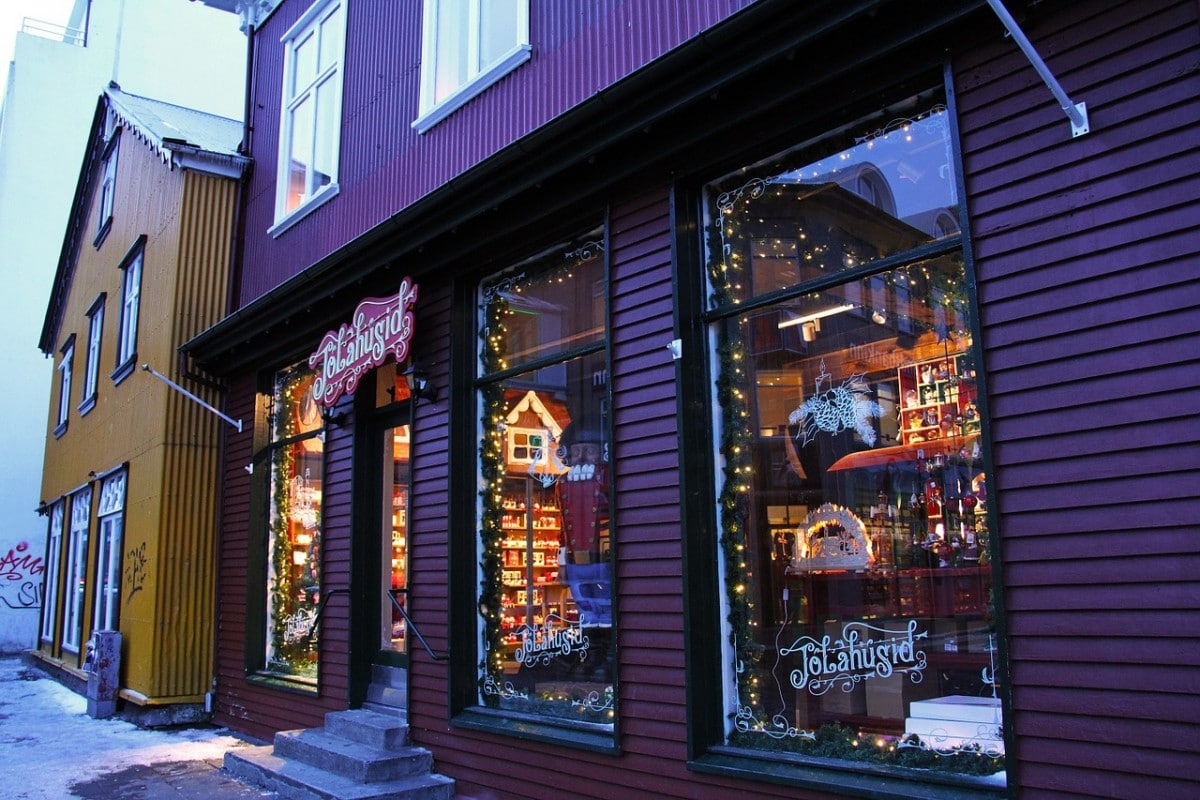
Celebrating Christmas – Joladagur – in Iceland. Photo by Ann Randall
Winter Holidays in Iceland—New Year’s Eve
The winter holidays in Iceland culminate in a grand celebration on New Year’s Eve. As with many other country’s traditions, fire for Iceland’s New Year’s Eve (Gamlarsdagur) symbolizes the burning away of the old year to celebrate the new one. Almost every town in the country has a community New Year’s Eve bonfire called a Brenna.
There are ten Brenna throughout Reykjavik. All are lit around 8:30 PM, drawing friends, family, and tourists to meet and celebrate the waning old year. Iceland’s emergency service organization sells fireworks as a Christmas and New Year’s fundraiser. As the clock strikes midnight, 500 tons of fireworks light up the night sky across the country.

Iceland New Year’s Eve Bonfire Photo by Ann Randall
Touring Iceland in the Winter
Iceland’s tourism operation doesn’t shut down during the holiday season except for exceptionally inclement weather (loftslag in Icelandic). Tour operators will take you to see the country’s sights—the Golden Circle, the Blue Lagoon, glacier hikes, diving, snowmobiling, and the Northern Lights—if you tire of the holiday festivities. You can also rent a 4×4 campervan to explore Iceland on your own.
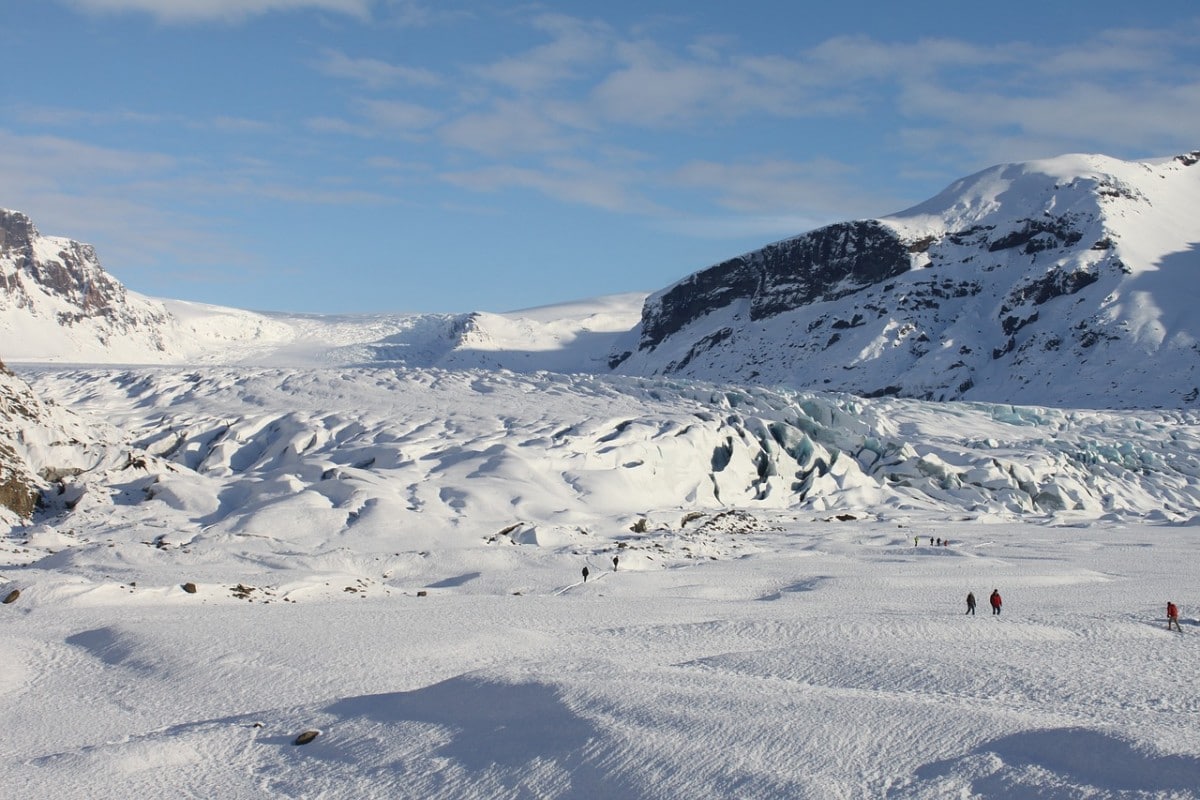
Iceland glaciers in winter. Photo by Ann Randall
On rainy days, when the wind blows sideways, there are museums to visit, stores filled with traditional wool Icelandic sweaters, and products made by hip Icelandic designers to browse. There are also bookstores and coffee shops everywhere to find quiet.

Christmas Day Glacier Hiking in Iceland. Photo by Ann Randall
Celebrating the winter holidays in Iceland is an opportunity to experience the country at its traditional and contemporary best. The long, dark days add to the magic and create an intimate experience where you feel you’re authentically part of the small country’s holiday traditions.
For more information on winter holidays in Iceland, visit Inspired by Iceland and Hostelling International Iceland. For more holiday travel ideas, see these articles by Wander writers.


0 Comments