
I love a good bubbly. A well-traveled Frenchman once told me, “There’s never a bad time for Champagne.” I was eager to adopt his motto and have made it my own, but I have also tried to embrace sparkling wines from around the world. I recently discovered the sparkling wines of Spain, known as Cavas. Here are a few of my favorites and what makes each special.
The Cava Tradition
The heart of Spain’s Cava region is in a picturesque region called Sant Sadurní d’Anoia. Spain takes Cava seriously. There’s a Cava museum in town—CIC Fassina—where you can learn the long history of the industry (it started in the 1870s in Catalonia) and how it was once called Champaña. The museum, located in what was once a distillery, illustrates how important the industry is to the area and how the industry nearly died thanks to a nasty little bug called the phylloxera that almost killed off all the grapevines. They are so dedicated to this little bug that they dress up in costumes each year and celebrate in the streets.

Photo of the Annual Phylloxera Festival in Sadurní d’Anoia
Thanks to the help of a hardy variety from the U.S., the wine industry in Spain was able to claw its way back to survival and thriving. I discovered some excellent sparkling wines with a lovely history and that can stand up to any of their much pricier French cousins.
The museum has English-language brochures and signage; it should take about an hour to view everything. The museum offers additional tours of the area.
Gramona Winery
Gramona was established in the heart of Sadurní d’Anoia in 1881. The town is about an hour outside Barcelona, so if you have an extra day during a visit to the city, it’s well worth the excursion. The winery itself is gorgeous. The building is spread out on three levels of stone and wood.
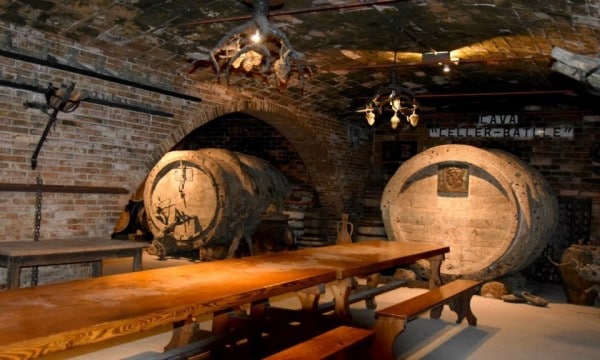
Gramona Cellar. Photo by Susan Lanier-Graham
As you descend the long stairs into the cellar, you wind through the dark labyrinth lined with bottles of aging Cava. Gramona is one of the few wineries that continues to do almost everything by hand. They still turn the bottles daily, making sure to baby the wine as it ages. The grapes of Spain’s Cavas are a little different than what many American wine drinkers might be used to daily. At Gramona, they use the traditional Cava blends of Xarel.lo (pronounced sharellō) and Macabeu, along with Pinot Noir and Chardonnay.
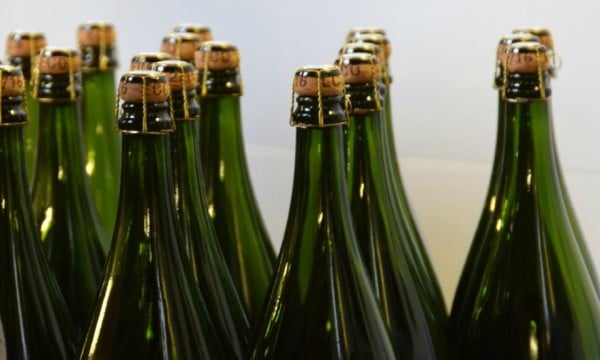
Bottles of Cava almost ready for shipping at Gramona. Photo by Susan Lanier-Graham
I enjoyed the sparkling wines I sampled that day at Gramona. My favorite was the Gramona III Lustros Brut Nature Gran Reserva 2007, and I’m not the only one. Wine Pleasures recently voted it the Gold Medal Winner of 50 Great Cavas for 2017. It’s 75% Xarel.lo and 25% Macabeu, and I love it because of the lively bubbles. It reminds me of fresh apples and would be perfect with manchego cheese and nuts.
Experience Freixenet
Freixenet is more familiar to Americans, so it was fun to see where it all started in Spain. The 1923 winery is quite the operation and houses the largest winery in the Freixenet Group. I loved the Gatsby feel as you approach the winery.
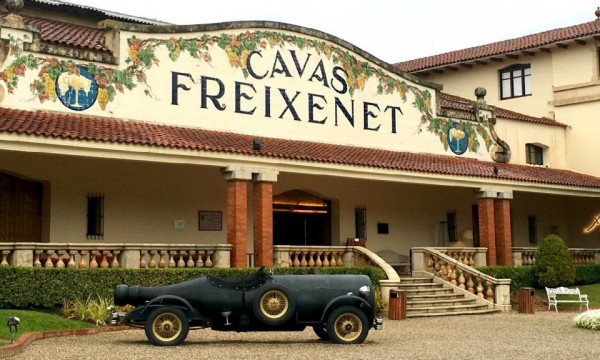
Cavas Freixenet is a 1923 building. Photo by Susan Lanier-Graham
I tried several different Cavas the night I visited Freixenet, and it was fun because I could sample them as we wandered through the caves that run under the winery. As we descended the stairs into the chalky depths of the Catalonian hillsides, the temperature dropped and the anticipation built.
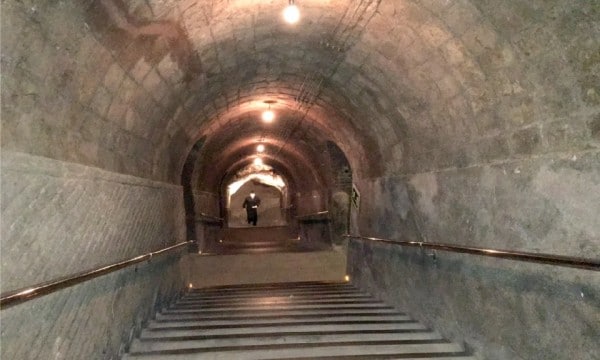
Descending the stairs into the Freixenet cellars. Photo by Susan Lanier-Graham
We found ourselves about 60 feet underground, surrounded by barrels filled with wines in various stages, from barrels to earliest bottles to boxed for shipment.
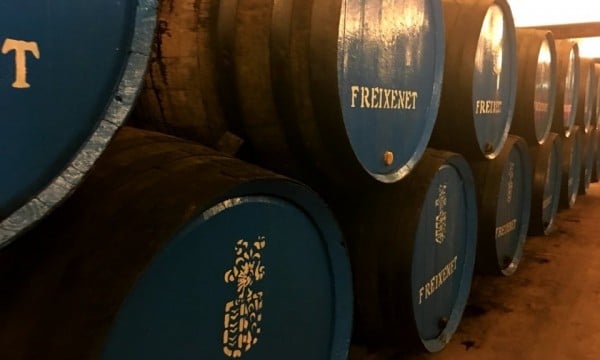
Freixenet barrels. Photo by Susan Lanier-Graham
My favorite Freixenet Cava was the 2006 Freixenet Casa Sala, which is still hand-turned (riddled), making it unique for Freixenet. It has aged for about seven years, longer than most Cavas. It reminded me of peaches made from Xarel.lo and Parellada grapes.
Codorníu, the Cathedral of Cava
My favorite winery on the visit was Codorníu, known fondly in the region as the Cathedral of Cava. The winery began in the middle of the 16th century when Anna Codorníu married a winegrower named Raventós. In 1872, Josep Raventós journeyed to France and discovered Champagne. He fell in love with the bubbles (I can’t blame him), brought the sparkling wine back to Catalonia, called it Champaña, and changed the wine industry in the region.
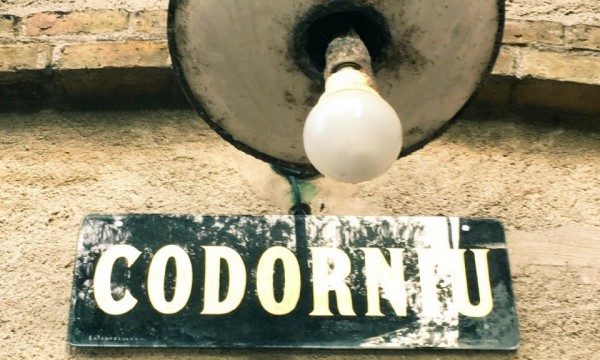
Codorníu brought sparkling wine to Spain. Photo by Susan Lanier-Graham
In 1885, Codorníu winery began construction on the Cathedral of Cava, a gorgeous building that resembles a cathedral and today serves as the wine-tasting room. The entire winery is filled with beautiful buildings, spires, wisteria, and moments made for stopping and sipping wine. The family’s mansion is now a private tasting room used for special occasions and is a favorite spot for weddings.
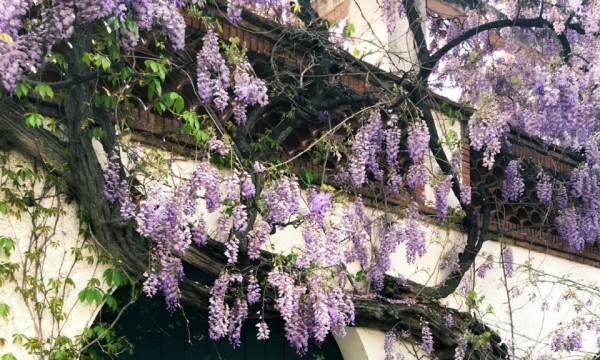
The grounds at Codorníu Winery. Photo by Susan Lanier-Graham
Click HERE to read the rest of the article on Travelocity.com.

0 Comments