
Read on to learn helpful tips for taking beautiful travel images with your smartphone, offering a versatile and convenient way to capture your experiences.
Discover smartphone photography tips for picturesque travel images.
In today’s technologically obsessed world, no matter where you are and what you are doing, your smartphone is always with you. This immense versatility and convenience mean you can always capture beautiful photos if you know how to use your smartphone camera to its full potential.
Whether you are a diehard Android lover or a loyal Apple customer looking to test out all the exciting new features of the iPhone 17 Pro, your phone has the potential to capture your memories and experiences for years to come.
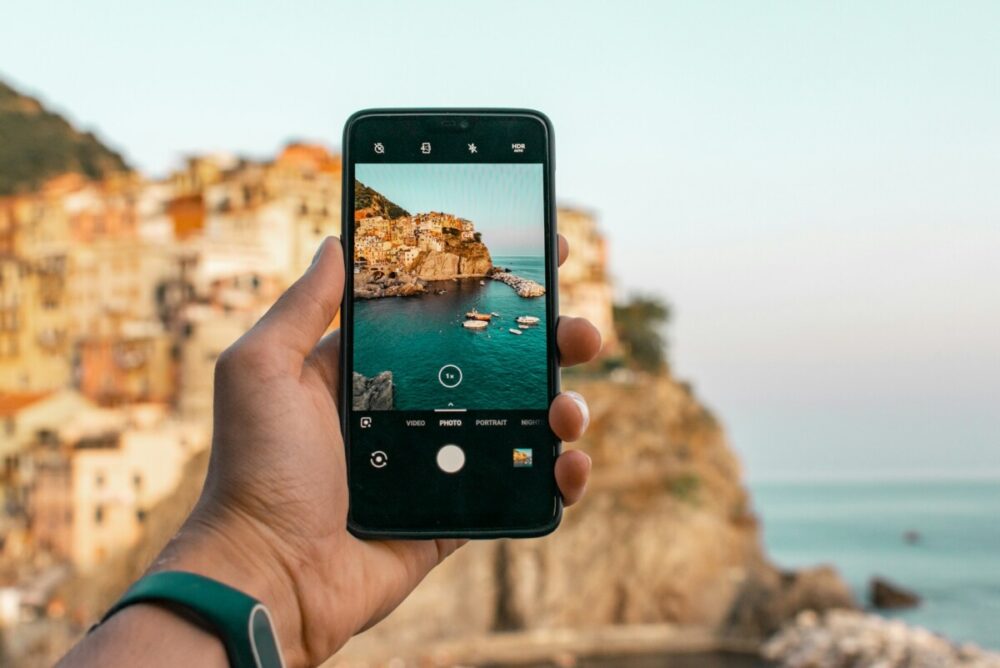
You can use your phone to capture professional travel images. Photo by Dominik Dancs on Unsplash
Learn the Light
In the world of photography, proper lighting is arguably the most important influencing factor for taking the perfect image. While plenty of light is available during the day, there are certain periods worth taking full advantage of.
Just after sunrise and just before sunset, you can experience golden hour. It is recognizable by the soft, warm, and low-angled sunlight that cascades over everything it touches. These brief periods of light are extremely popular times to shoot, as they reduce harsh shadow, create a warm glow on your subject, and produce long, dramatic shadows that add spectacular depth to photos.
Alternatively, you can shoot during blue hour, the 20 to 30-minute photographic window that occurs just before sunrise and just after sunset. The cool, soft, and dramatically deep blue, ambient light is ideal for moody, cinematic images, often used when capturing cityscapes.
Panorama Images
If you find yourself in a particularly beautiful location with a landscape or cityscape that a single photo couldn’t capture, try shooting in panorama mode. You will need to maintain a steady hand to ensure a smooth, seamless final photo, but opting for a panorama shot will let you capture much more of the scenery.
This type of photography may take some practice to perfect, so spend some time learning the proper technique to get the results you want. You may only have one opportunity to get it right at the moment, so having some experience will give you the best chance for the perfect image. For something a little different, flip your phone sideways and scan upwards to capture a vertical panorama. This is a fantastic technique for shooting tall buildings, waterfalls, and trees.
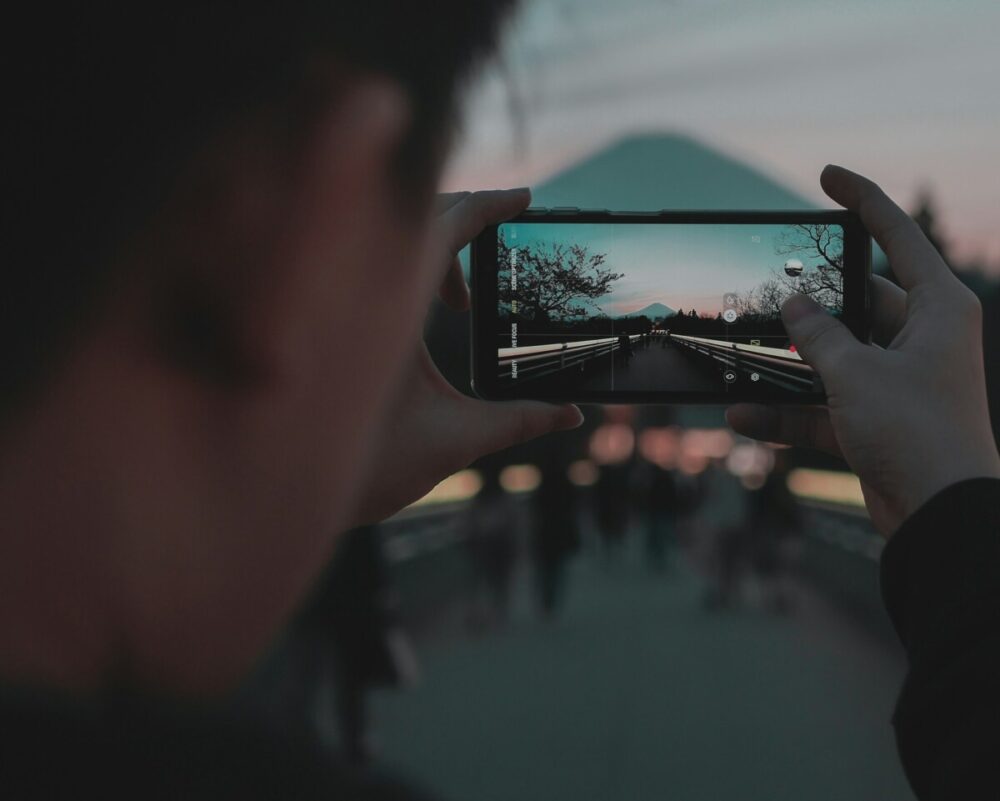
Panorama images are fun, and you can try something different by flipping your phone sideways and scanning upwards to capture a vertical panorama. Photo by Christofer Tan on Unsplash
Rethink the Zoom
When shooting with a smartphone, it can be easy and tempting to use the zoom feature to bring distant objects much closer into view. But more often than not, the results do not live up to expectations. This happens because digital zoom automatically crops your photo, making it pixelated and blurry the more you zoom in.
Newer smartphone models have optical zoom, which means they use the phone’s lens to magnify your chosen subject rather than just cropping the image, typically producing better image quality. If you want to consistently get closer shots of your subject while maintaining high image quality, use optical zoom or invest in a high-quality telephoto clip lens for your phone.
Utilize Grid Lines
One of the easiest and quickest ways to upgrade any shot you take is by turning on the grid lines. By using a grid to compose your photo, you can utilize one of the most important rules in photography: the rule of thirds.
The idea is to take an image and divide it into three rows of three blocks running vertically and horizontally. The goal is to keep the subject or main elements along these lines or at their four intersection points, creating a balanced, engaging, and dynamic photo.
Because photography is an art form and not an exact science, the rule of thirds is not a compulsory rule that you must follow. Instead, it should be viewed as a valuable tool for understanding composition, helping you capture the images you want.
Self-Shooting
Unless you are strictly aiming to capture endless selfies, taking shots of yourself can be challenging to get, especially if you are traveling solo. A cost-effective and easy-to-carry solution is to invest in a lightweight, foldable tripod and a Bluetooth remote, as their compact size makes them easy to pack in your luggage or backpack.
Pixter makes a clever, flexible tripod that securely wraps around nearly anything and everything you could want, allowing you to get unique angles for interesting shots, and their Bluetooth remote controls are responsive and reliable.
Use Manual Controls
Photos featuring light trails and motion trails are some of the most eye-catching images you will find. From the long, bright lights of cars moving across a winding stretch of open road at night, to the silky smooth appearance of a waterfall, river, or clouds scattered across the sky on a windy day, capturing motion in pictures can produce breathtaking results.
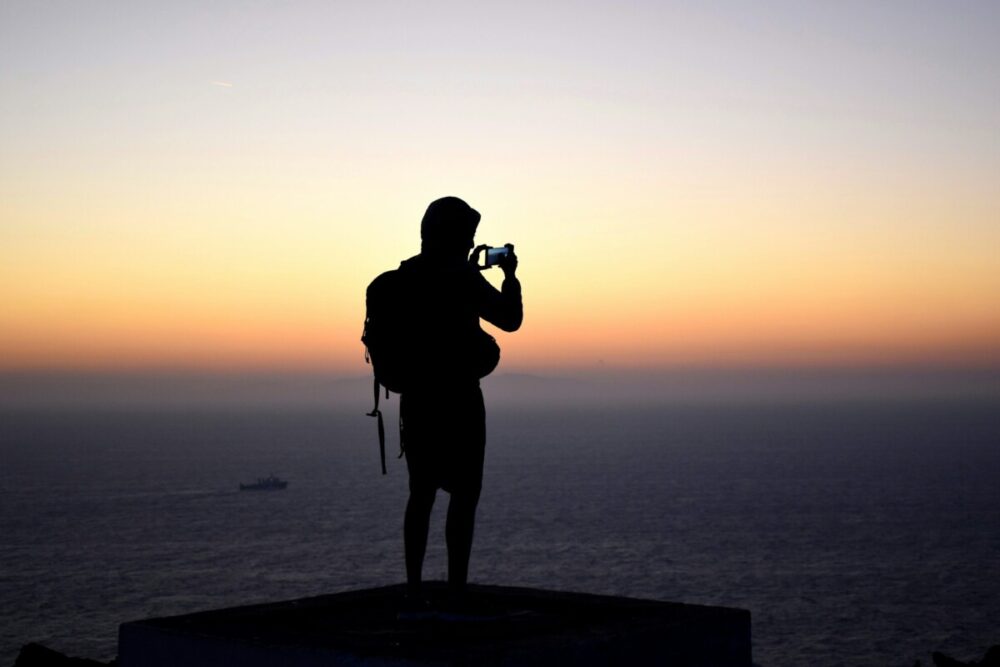
Use manual controls on your phone to capture breathtaking photos, such as sunsets, sunrises, and special lighting. Photo by Mauro Sbicego on Unsplash
The good news is that this type of photography is not reserved solely for DSLR users. As a mobile phone photographer, you can use apps that offer more control over shutter speed, such as Slow Shutter Cam or ProCam, to capture these images if your phone model doesn’t already have manual controls. For the best results, use these apps in conjunction with a tripod and a shutter remote to keep your phone perfectly still.

0 Comments