
Dinosaur Valley State Park in Texas is a must-see destination. The park’s main attraction is its many dinosaur tracks left in the river.
I am hunting dinosaurs. You might think this is a challenge in today’s world. But, after following their tracks, I finally found them at Dinosaur Valley State Park Texas. The focal point of the park is the thousands of dinosaur footprints in the rock lining the Paluxy River. This family-friendly Texas park is a must-see destination for those of us fascinated by dinosaurs.
Where to Find Dinosaurs
It is not surprising that Glen Rose is “The Dinosaur Capital of Texas.” Dinosaur Valley State Park is located just a few minutes west of Glen Rose on FM 205. And the quaint town is located only 60 miles Southwest of Fort Worth. For other locations in Texas that feature dinosaurs, check out Wander contributor, Cathrine Parker’s, article Where to Find Dinosaurs in Texas.
Glen Rose is a small town of about 2,500 people. It has a picturesque town square with a Victorian courthouse. The clock faces on the courthouse tower blew off in a tornado in 1902. The town did not replace the faces until 1986. That might give you an idea of the easy pace in Glen Rose. It is certainly worth some time to get to know the town when you visit the state park.

The Somervell County Courthouse faces the town square in Glen Rose, Texas. Photo courtesy of Bob Weston via iStock
Making Tracks
The footprints at Dinosaur Valley State Park Texas are millions of years in the making. Here’s a brief overview of how the tracks appeared in Texas.
The Dinosaur Era
During the Cretaceous period, about 105 million years ago, muddy lime sediment was deposited on the western edge of a shallow sea that covered most of what would become Texas. Ancient animals such as Iguanodon and Pleurocoelus grazed and hunted on the edge of this sea. They moved among pine trees and ferns growing along the shore as Pappotherium and Holoclemensia scurried around their feet and Pterosaurs circled on lazy wind currents overhead.
As these animals went about their lives, they left footprints in the mud. The sea receded and the mud dried until the next season when the sea came again and deposited softer material over the footprints. The cycle continued until the sea finally dried up and the mud turned to stone.

Pterosaurs fly over a herd of herbivorous dinosaurs in the Cretaceous period. Image courtesy of Corey Ford via iStock
Exposing the Footprints in Dinosaur Valley State Park Texas
Millions of years later, the Paluxy River eroded through the layers of sediment where the seashore had once been. Eventually, the river washed away the softer rock and exposed the footprints preserved in the harder limestone layer. Most of the footprints were finally exposed during a flood in 1908 that dislodged the final layer of rock covering the prints. The area has been a tourist attraction ever since.
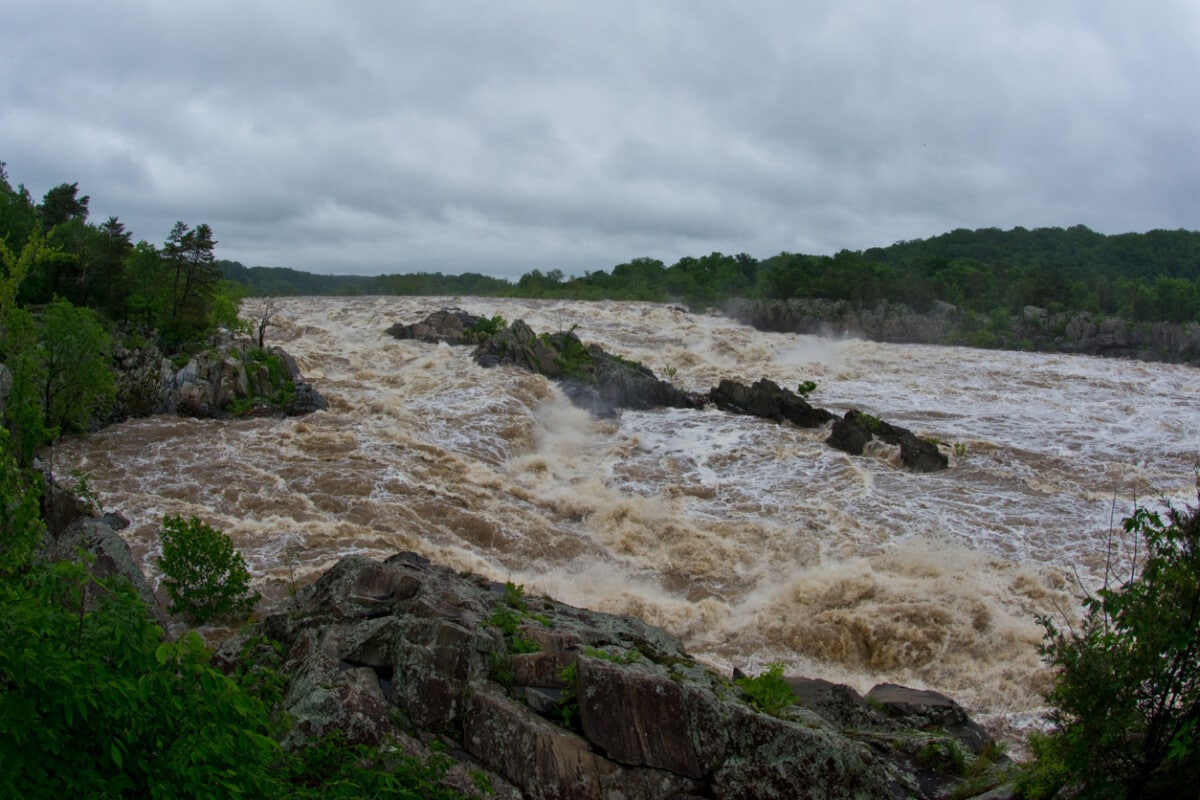
Floodwaters exposed the buried dinosaur footprints. Photo by Douglas Rissing via iStock
Preserving the Footprints: Creating Dinosaur Valley State Park Texas
During the Great Depression in the 1930s, it became common for people to cut the dinosaur prints out of the river bottom and sell them. A major preservation effort was begun in 1940 by R.T. Bird, a fossil collector for the American Museum of Natural History. The preservation effort culminated in 1972 when 1,587 acres were set aside as Dinosaur Valley State Park in Texas.
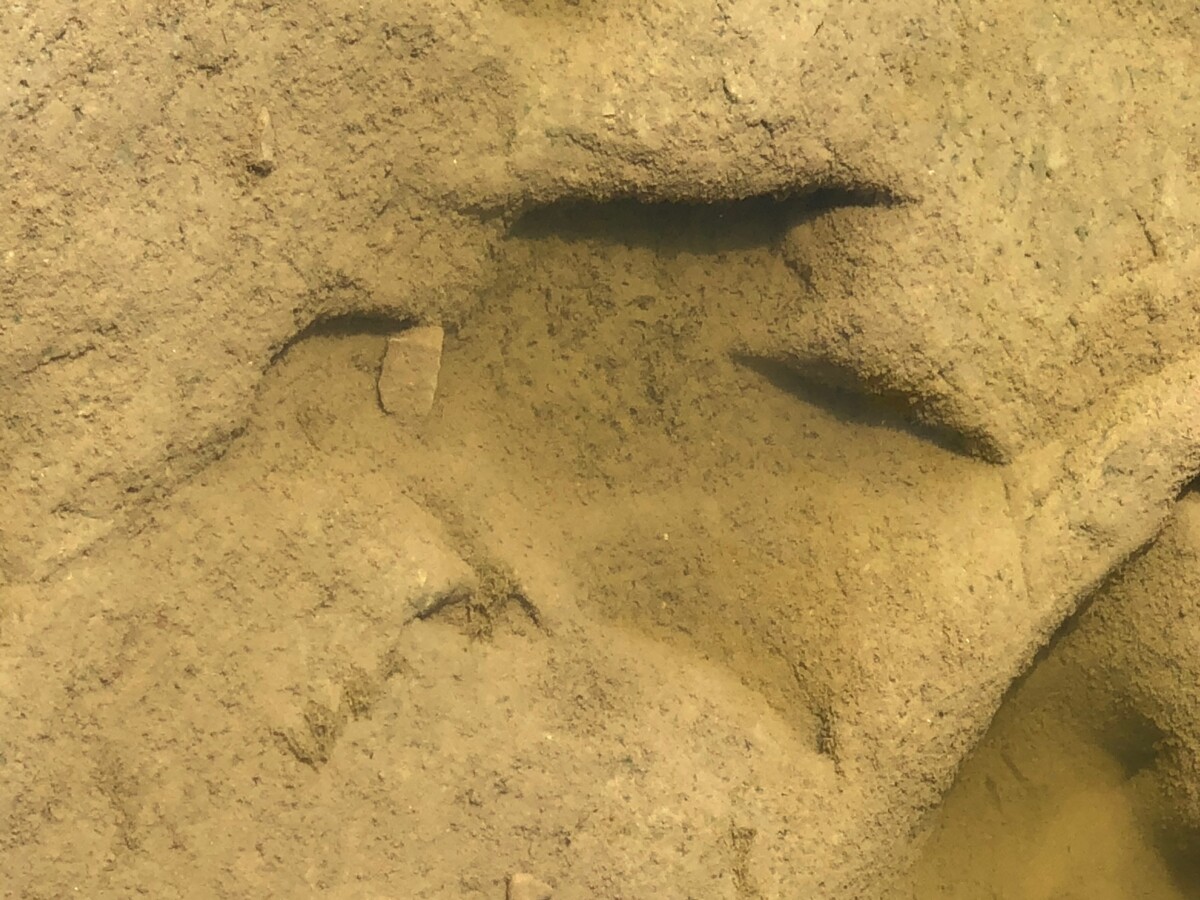
Dinosaur footprint in the Paluxy River. Photo by Bill Graham
What to Do in Dinosaur Valley State Park Texas
The park is pretty big. The Paluxy River bends in a horseshoe as it flows through the park. It is about a half-mile between the sides of the horseshoe. In all that space there is a lot to do in the park.
What to Do: Search for Dinosaur Tracks
The dinosaur footprints are definitely the main attraction at Dinosaur Valley State Park Texas. All the footprints are in the Paluxy River bed or a tributary. As the water level in the river fluctuates, the tracks may be dry or under several feet of water. It is a good idea to call the park office before your trip to make sure the tracks are accessible. Most of the tracks will be in some water, so be prepared to wade. The river can be treacherous with a slippery bottom and deep pools. I was surprised to see that the park provides loaner life jackets for safety.
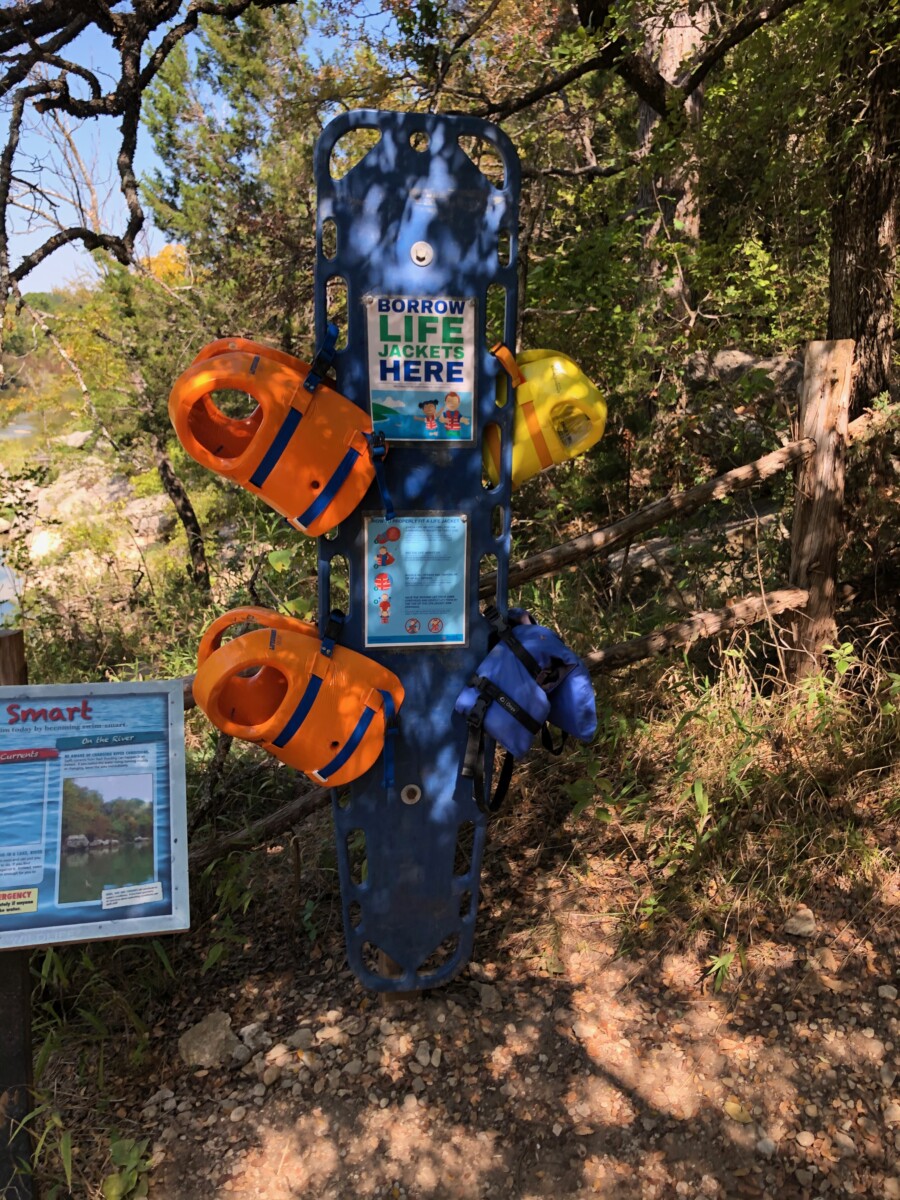
The park provides loaner life jackets for water safety. Photo by Bill Graham
Which Dinosaur Species to Track
While there is evidence of at least 10 species from the Cretaceous period in Dinosaur Valley State Park Texas, including mammals, marsupials, and an early crocodile, the most common tracks belong to sauropods and theropods.
Sauropods are plant eaters. They look something like a brontosaurus with a long thin neck and a long tail. They were about 40 feet long from nose to tail. Sauropod tracks are interesting because their back feet were like an elephant’s—almost round with short toes—while their front legs ended in hooves about a foot across, like a really big horse. To look at the tracks, it seems like two different animals.
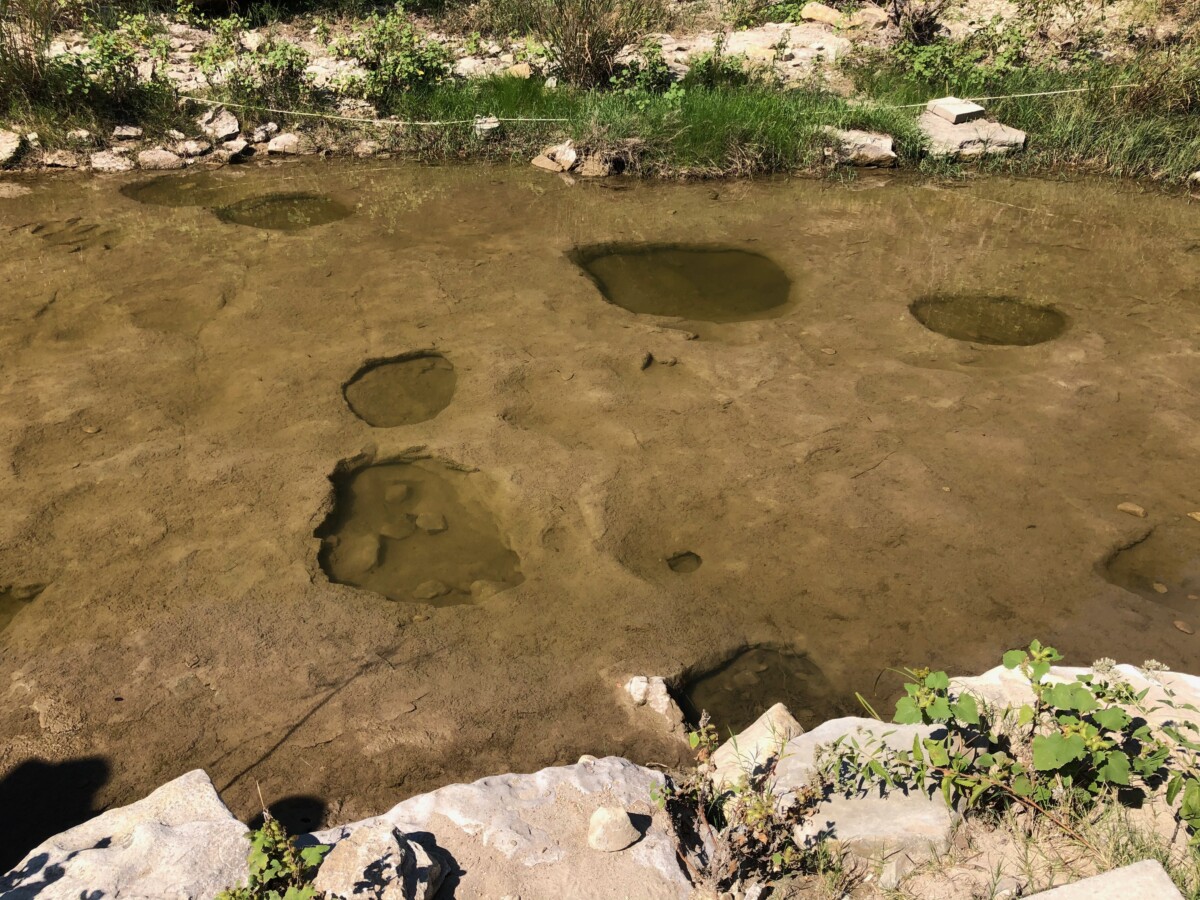
Sauropod tracks are clearly visible at The Main Site. Photo by Bill Graham
Theropods were meat-eaters. They were related to Tyrannosaurus with two legs and short forearms. Theropods were about 25 feet tall. Their feet had the distinctive three toes that most of us think of as dinosaur tracks.
Where to Look for Dinosaur Tracks
There are five main sites where there are concentrations of tracks. Track Site Area 3 is currently closed because the tracks have mostly eroded away and the viewing area is unstable. Ask for a map at the park entrance or pick one up at the gift store.
The Ballroom at Track Site Area 1 is my favorite. The Ballroom is an enormous area on a flat river bottom. The area is entirely covered with hundreds of footprints as if the dinosaurs were dancing. There are nine very large sauropod prints that are more than 36 inches across. There are also tracks that seem to indicate that a young sauropod was being pursued by a theropod. The flat river bottom makes it easy to explore when the water is shallow.
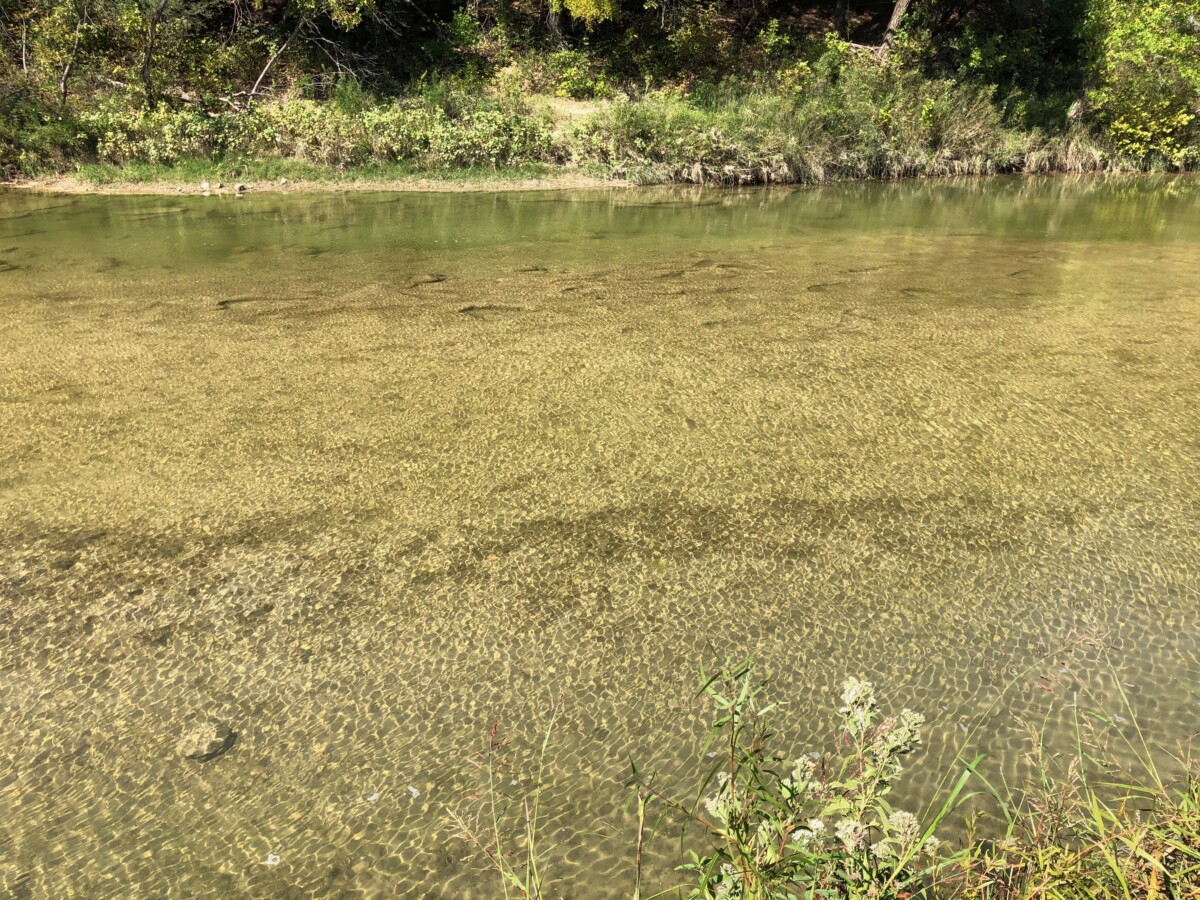
The Ballroom Site offers shallow slow-moving water and a smooth level bottom. Photo by Bill Graham
Track Site Area 2 includes The Main Ledge, The Bird Site, and The Ozark Site. The Bird Site is where R.T. Bird first identified tracks of the sauropod species, now named Sauroposeidon Proteles, in 1940.

The river crossing at The Ozark Site provides access to dinosaur trails both upriver and down river of the crossing. Photo by Bill Graham
When I visited, the tracks at the Ozark Site were harder to recognize because they are mostly filled with sand and gravel. But, it is fun to try and find the trails.

Some footprints, like this sauropod track, are hard to recognize because they are filled with sand and gravel. Photo by Bill Graham
What to Do: Explore the Hiking Trails
Dinosaur Valley State Park Texas has over 20 miles of hiking trails. The trails range in difficulty from easy strolls to moderately difficult climbs to the ridge flanking the river valley. You can explore an interactive trails map before your visit.

There are no difficult trails in the park. The trails are well marked and well maintained. They mostly wind through low-growing juniper and oak with plenty of shade.

The trails in the park mostly wind through the oak forest that provides plenty of shade. Photo by Bill Graham
The best trails are across the river from the developed part of the park. Since there are no bridges, be prepared to wade the river to get to the other side. Take the Cedar Brake Outer Loop Trail on the West side of the park. The trail climbs to the ridgetop above the valley for spectacular views. Cedar Brake is a tough climb for three and a half miles to the top.

The view of the Paluxy River from the top of the Cedar Brake Trail is well worth the climb. Photo by Bill Graham
For an easier climb to incredible views, try The Overlook Trail. It is an easier climb for only a quarter of a mile to the scenic overlook with a view of the river.
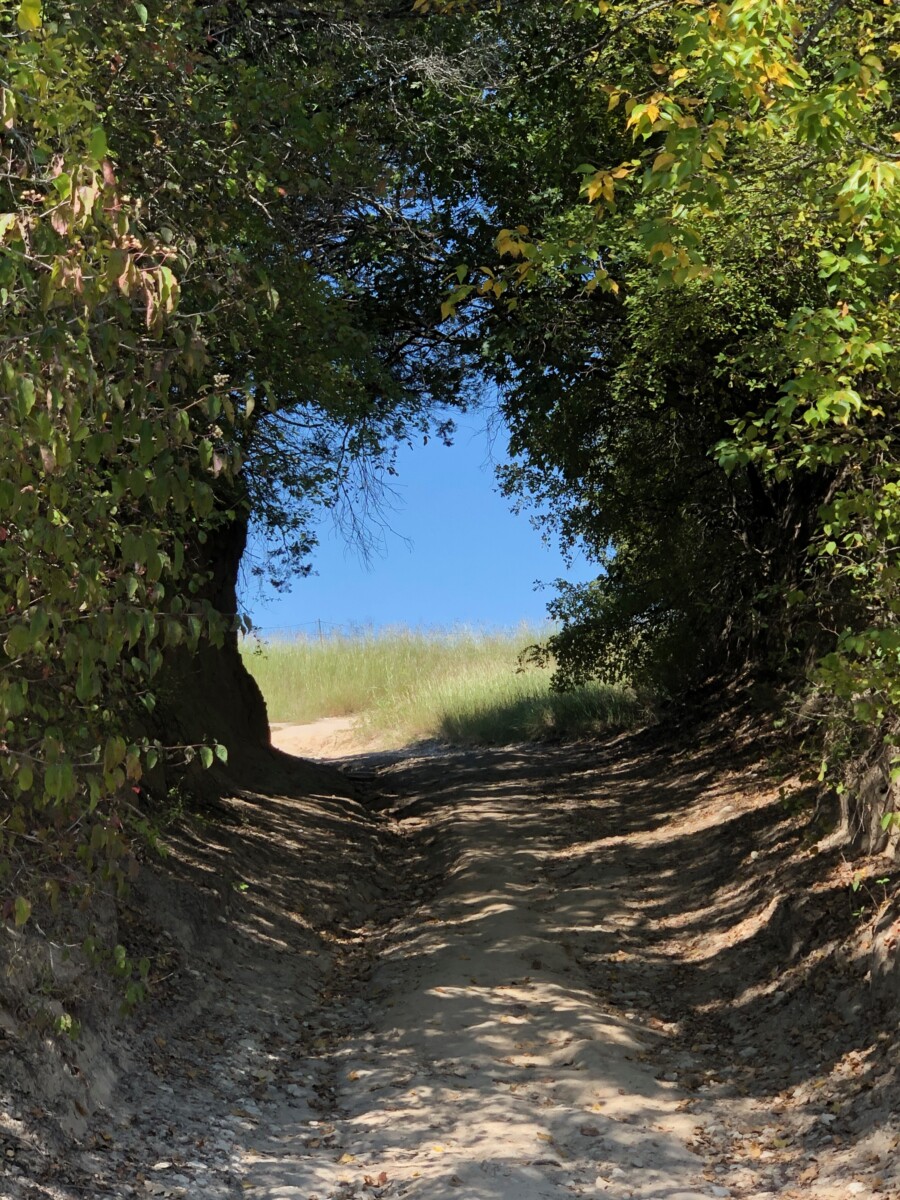
The Overlook Trail provides a gentle path and beautiful views. Photo by Bill Graham
There are also numerous paths in the developed part of the park, both paved and level, packed earth.
What to Do: Camping at Dinosaur Valley State Park Texas
Dinosaur Valley State Park Texas has 64 campsites, including RV spaces with water and electric hookups.
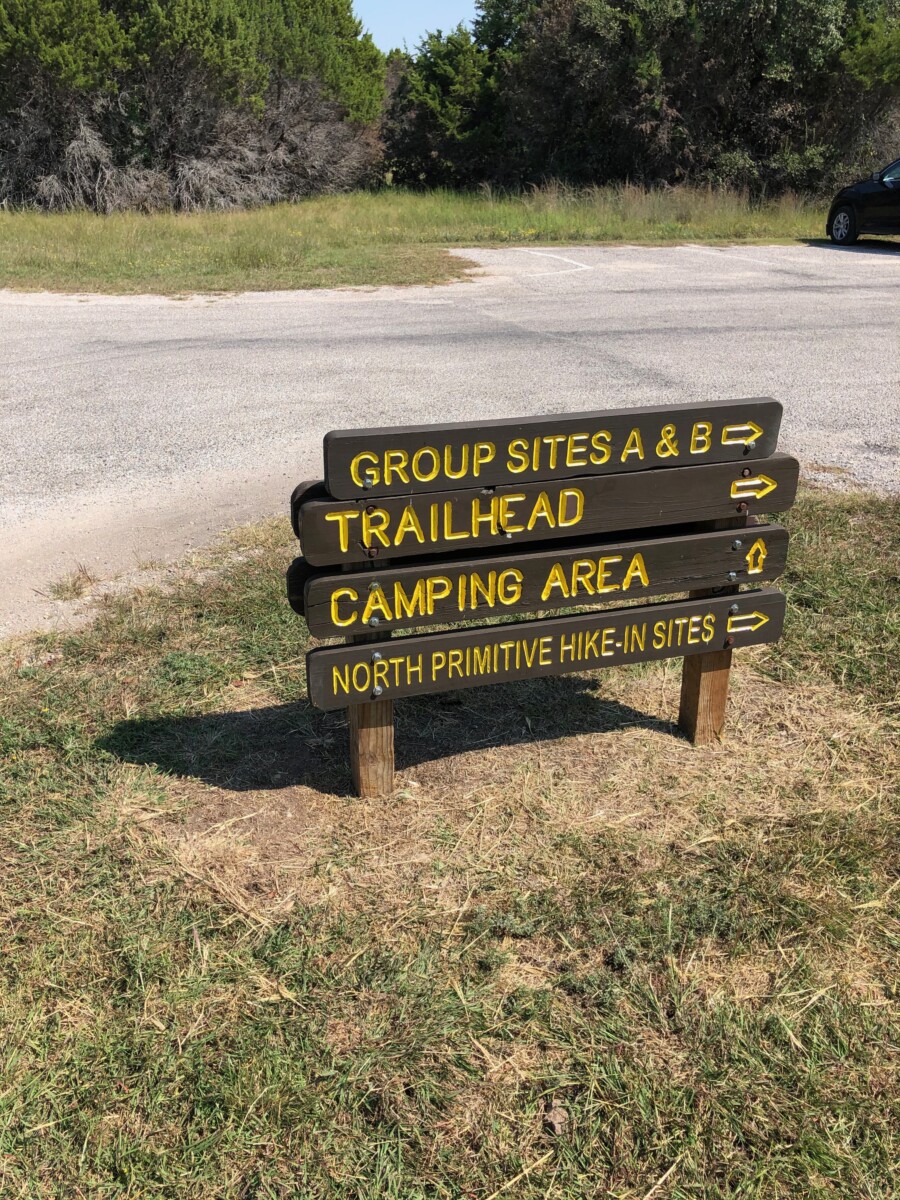
There are many camping options at Dinosaur Valley State Park Texas. Photo by Bill Graham
For a little more seclusion there are also walk-in and hike-in sites. Most have picnic tables, fire rings, and lantern posts. It is a good idea to make reservations before you go because the sites can fill up fast.
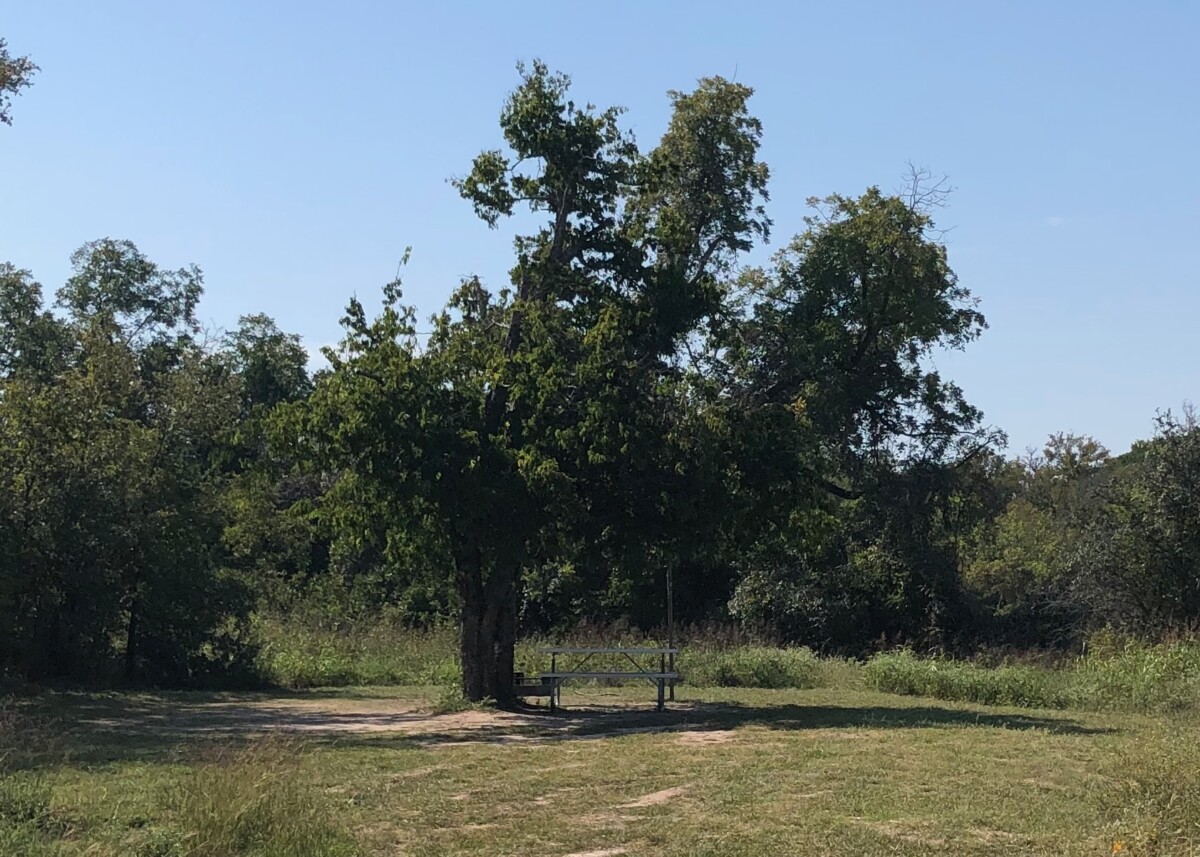
Walk-in campsites include a picnic table, fire ring, and a lantern post. Photo by Bill Graham
What to Do: Check Out the Dinosaur Models
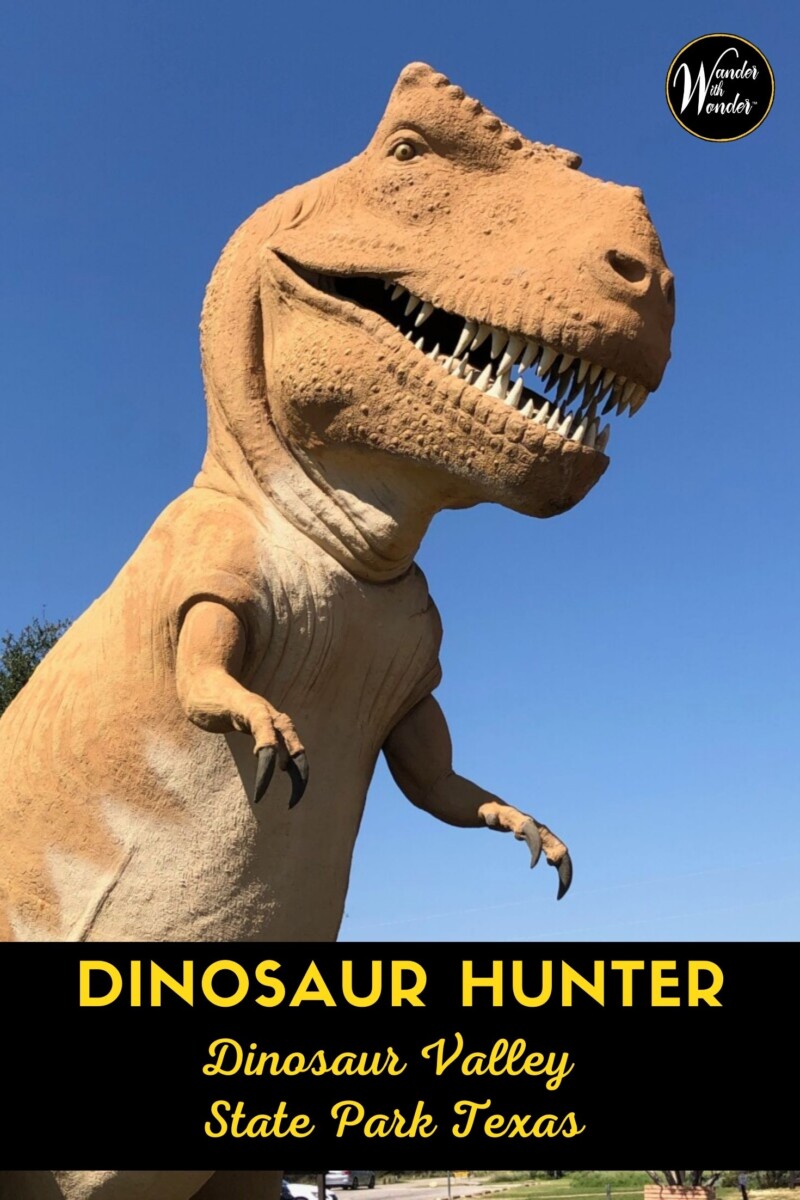
Lifesize models of a brontosaurus and tyrannosaurus are a hit attraction for adults and kids alike at Dinosaur Valley State Park Texas. The models were created for the Sinclair Oil Corporation’s exhibit for the 1964 World’s Fair.
Sinclair has used the brontosaurus logo since the 1930s. So, it made sense that their exhibit would feature dinosaurs. After the fair closed, Sinclair donated two of the models to the park. The models provide an added perspective to the footprints in the park.

Dinosaur models at the park provide an additional perspective to the footprints. Photo by Bill Graham
Articles Related to Dinosaur Valley State Park, Texas
- Things to Do in Beaumont, Texas
- Find the Best Birdwatching in Texas on Mustang Island
- Adventure Camping at Caddo Lake, Texas
- Best Texas State Park Lodges and Cabins
- 2 Days in Galveston
Completing the Dinosaur Hunt
It turned out that Dinosaur Valley State Park Texas is the perfect place for a dinosaur hunt. I found the footprints, followed the trails, and found lifesize dinosaurs. I hope that your visit to the park will be as rewarding.
Be sure to check out our other fascinating Wander destinations in Texas! We also have more great ideas for family travels.

0 Comments